
24/7 SECURITY
Video Surveillance in Los Angeles for Parking Lots and Garages
Most break-ins in Los Angeles lots and garages are found the next morning. Our operators watch your cameras live and call police while the person is still there.
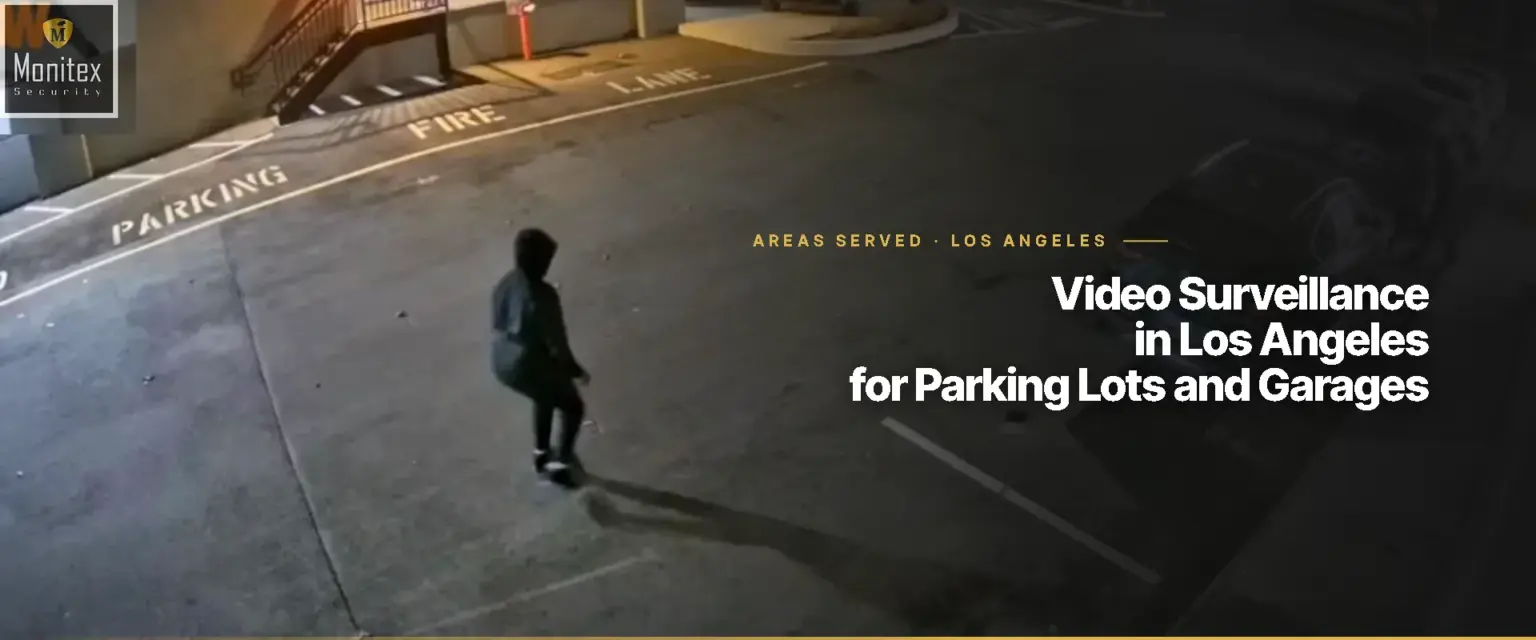
Video surveillance in Los Angeles turns into live monitoring once an operator is looking at the feed in real time: someone breaking into a car hears a warning over the lot’s speaker, and LAPD gets a call before the person leaves. Monitex Security watches parking lots, garages, apartment buildings, dealerships and other commercial properties across Los Angeles. LAPD’s 2025 incident data counts 18,376 offenses in the city’s parking lots and garages, more than at any other kind of property outside streets and private homes, led by thefts from vehicles, vehicle thefts and vandalism.
Table of Contents
Los Angeles Lots, Garages and Buildings With an Operator on the Cameras
A camera in a Los Angeles parking structure usually does one job: it records. When a car window gets smashed at 2 a.m., the footage shows it the next day, after the owner has already called. Video surveillance Los Angeles property managers can act on needs a person watching while it happens. Monitex Security supplies that person. Our operators see someone trying door handles, talk to them over a speaker on site and phone LAPD with a description and the exact level or row.
We monitor properties across the city, from Downtown and Hollywood to the San Fernando Valley and the Harbor area. Parking leads this page because LAPD’s own numbers put it first. Apartment buildings, dealer lots, hotels and warehouses get the same watch; the full list sits lower on this page. Questions about your lot or building? Contact us today.
Where Los Angeles Offenses Happened in 2025
Every LAPD report records the type of place where it happened. Among the kinds of property we monitor, parking comes first by a wide margin.
| Type of place (LAPD) | Offenses in 2025 | Our page for it |
|---|---|---|
| Parking lots, garages and drop lots | 16,751 | Parking lots |
| Apartments, condos and townhouses | 12,517 | Residential buildings |
| Department and discount stores | 3,244 | Shopping malls and supermarkets |
| Underground and multi-level parking structures | 1,625 | Parking lots |
| Commercial and office buildings | 1,548 | Office buildings |
| Hotels and motels | 1,504 | Hotels |
| Banks | 1,062 | Banks |
Source: our count of the LAPD NIBRS Offenses Dataset (City of Los Angeles open data), offenses that occurred January 1 to December 31, 2025, read November 2026. Streets, sidewalks, private homes and LAPD's catch-all "other business" category aren't shown. LAPD moved to this reporting system during 2024, so 2024 isn't directly comparable.
Parking Lot and Garage Security in Los Angeles
A parking lot is open by design. Cars sit unattended for hours, the attendant booth closes at night, and anyone can walk in from the sidewalk. A garage adds stairwells, dark corners and levels a single camera can’t see at once. That’s why, in LAPD’s 2025 data, only streets and private homes had more offenses than lots and garages. The problems there are mostly the same few: someone breaks into a car, drives one away or damages what’s parked.
What LAPD Recorded in Lots and Garages in 2025
| Offense | Surface lots and drop lots | Garages and parking structures |
|---|---|---|
| Theft from a vehicle | 4,090 | 781 |
| Vehicle theft | 3,206 | 266 |
| Vandalism | 2,545 | 300 |
| Theft of vehicle parts | 617 | 28 |
| Robbery | 510 | 9 |
| Share between 8 p.m. and 6 a.m. | 36% | 44% |
| All offenses | 16,751 | 1,625 |
Source: our count of the LAPD NIBRS Offenses Dataset, 2025. The busiest LAPD areas for these offenses were Central (2,370), Pacific (1,525) and North Hollywood (1,218).
The night share matters for how you staff a property. About a third of lot offenses and close to half of garage offenses happened after 8 p.m., when most lots have no attendant and most managers are asleep. A recorded clip from those hours tells you what happened. A live operator can interrupt it.
Catalytic Converters and the City's Possession Rule
Los Angeles answered a wave of catalytic converter thefts with an ordinance: since June 2023, anyone holding a catalytic converter that isn’t attached to a vehicle must be able to show they possess it lawfully (LAMC § 56.32; CBS News Los Angeles covered the council vote). The rule helps police once someone is stopped with a cut converter. It doesn’t stop the cutting, which takes a few minutes under a parked car. An operator who sees a person crouched under a vehicle at 3 a.m. can warn them off and get police there while the saw is still out.
A Lot Case From Our Monitoring Team
In a case from New York, cameras at a client’s car dealership picked up a person walking into the lot at night and crouching beside an SUV’s front wheel. Our operators contacted police while the person was on the property, and patrol cars arrived with lights flashing behind the rows of vehicles. See the vehicle tampering case. The same setup works in a Los Angeles lot or garage: cameras that can be viewed remotely, a speaker, and an operator who knows the layout.
Where Live Monitoring Fits in an LA Lot or Garage
- Overnight and on weekends, when the booth is closed and the lot or structure has no one on site.
- In garages with stairwells, ramps and upper levels that a single attendant can’t see.
- At entrances and pay stations, where most people who don’t belong first show up.
- With your existing camera system, as long as it streams off site; a speaker near the entrance is often the only addition.
More detail: parking lot monitoring.
How Monitex Monitors Los Angeles Properties
There’s no Monitex office in Los Angeles and nobody from us patrols your property. The watching happens remotely, from the Monitex monitoring center, and the response comes from LAPD or the contacts you give us.
- We connect to your cameras. Most modern systems can stream to us securely; if yours can’t, we tell you what to add.
- Alerts go to a person. Motion in a closed lot or on an empty garage level brings that camera up for an operator, who checks whether it’s a tenant, a valet or an intruder.
- A warning comes first. Over the speaker on site, the person hears a live voice describing them and saying officers are on the way. Many walk away right there.
- LAPD gets the details. If the person stays, the operator calls police with a description, what they’re doing and where they are, and keeps watching until officers arrive.
- You get a record. After an incident you receive a short written account plus the clip, ready for a police report, an insurance claim or your tenants.
More on the service: live video monitoring. For statewide rules, see our page on video surveillance in California.
Industries We Monitor in Los Angeles
Parking Lots
Surface lots and parking structures after dark.
LAPD counted 18,376 offenses in Los Angeles lots and garages in 2025, more than any other kind of property outside streets and homes. Operators watch entrances, ramps and levels, speak to anyone testing car doors and call LAPD with the exact row or level.
Read moreResidential Buildings
Tenant garages and front entrances.
Apartments, condos and townhouses were the second most common place for offenses in Los Angeles in 2025, at 12,517. Operators keep an eye on gates, tenant parking and mail rooms and speak up the moment a stranger slips in behind a resident.
Read moreCar Dealerships
Inventory rows after closing.
LAPD recorded 264 offenses at Los Angeles auto dealerships in 2025, on lots full of cars and catalytic converters. Operators watch the rows and key drops overnight and speak to anyone who walks in after hours.
Read moreShopping Malls & Supermarkets
Storefronts, docks and lots after close.
Department and discount stores (3,244), grocery stores (1,798) and malls (904) together saw about 5,900 offenses in Los Angeles in 2025. After closing, operators watch the receiving doors and the lot and step in before a break-in starts.
Read moreOffice Buildings
Lobbies and garages once tenants leave.
LAPD counted 1,548 offenses at commercial and office buildings in 2025, a third of them between 8 p.m. and 6 a.m. Operators watch lobbies, loading docks and garages after hours and call police when someone is inside who shouldn't be.
Read moreHotels
Lots and side doors the front desk can't see.
Hotels and motels saw 1,504 offenses in Los Angeles in 2025. Operators keep watch on guest parking, stairwells and side entrances overnight and alert the night manager or police.
Read moreBanks
Branches, ATMs and night drops.
LAPD recorded 1,062 offenses at banks and 305 more at standalone ATMs in 2025. Operators watch ATM areas and branch lots after the lobby locks and have the clip ready by morning.
Read moreWarehouses & Self-Storage
Yards, docks and unit rows.
Rental storage facilities (894) and warehouses (628) logged about 1,500 offenses in Los Angeles in 2025. Operators check gates, dock doors and storage hallways through the night and bring in police once someone is past the fence.
Read moreSchools & Campuses
Campuses on nights and holidays.
Schools and colleges in Los Angeles saw about 1,460 offenses in 2025. Evenings, weekends and summer break, operators keep watch on gates, parking and sports fields and bring in police for anyone who has no business there.
Read moreHealthcare
Hospital garages and staff doors.
LAPD counted 535 offenses at Los Angeles hospitals in 2025. Operators cover staff entrances, parking structures and wings that close at night, so a problem reaches security or police quickly.
Read moreConstruction Sites
Fenced lots between shifts.
Construction sites in Los Angeles had 370 offenses in 2025. Operators watch the gate, staged materials and equipment after the crew leaves and call police while a trespasser is still on site.
Read moreCannabis Facilities
Dispensaries once the doors lock.
Dispensaries, cannabis retailers and grow sites logged about 160 offenses in Los Angeles in 2025. Overnight, an operator watches the storefront, the safe room door and the back lot and calls police at the first forced entry.
Read moreLos Angeles Rules Property Owners Should Know
A few city rules shape how a Los Angeles property handles security. State law on audio recording and workplace violence plans applies too; our California page covers those.
- Alarm permits: the city requires a permit to operate an alarm system, and LAPD charges a fee for each false alarm, rising with repeats. Live monitoring cuts false calls, because an operator checks the camera before police are called.
- Catalytic converters: since June 2023, carrying an unattached catalytic converter without proof of lawful possession is a city offense (LAMC § 56.32). Footage of the theft and the person helps police tie a converter to your vehicle.
- Audio: California requires every party’s consent to record a confidential conversation (Penal Code § 632), so most lots and garages record video only and use speakers for live warnings.
- Signs: a “video monitored” sign at each entrance tells drivers and visitors the cameras are watched, and it’s often what makes a person turn around.
This is general information, not legal advice. Check specific questions with your attorney.
FAQ
Do Los Angeles businesses need an alarm permit?
Yes. The City of Los Angeles requires a permit to operate an alarm system, and LAPD charges a fee for each false alarm, with higher charges for repeats. Live video monitoring helps because an operator looks at the camera before police are called.
Which parking offenses are most common in Los Angeles?
In LAPD's 2025 data, thefts from vehicles led (4,871 in lots and garages), followed by vehicle thefts (3,472) and vandalism (2,845). Garages had the highest night share: 44% between 8 p.m. and 6 a.m.
Can our garage cameras record audio in Los Angeles?
Only with care. California law requires every party's consent to record a confidential conversation, so most garages keep audio recording off. Operators can still speak through a speaker on site to warn someone.
Is there a Monitex office or guard service in Los Angeles?
No. Everything runs remotely: operators at our monitoring center view your cameras, talk through the speakers on your property and phone LAPD when needed. Monitex doesn't place guards on site.
Can you monitor the cameras already in our lot or garage?
In most cases. If your recorder can send video off site securely, we connect to it; if a level or stairwell has a blind spot, we say so and suggest what would cover it.
Talk to Us About Your Los Angeles Lot or Building
Tell us where the property is, how many levels or rows it has and which cameras are already up. You’ll hear how an operator would cover it overnight and what happens the moment someone tries a car door. Contact for inquiry to start that conversation.
Request a Quote
“Extremely efficient from initial setup to daily monitoring. They had our vacant property secured and online faster than any other vendor. The biggest win: visible deterrence. We’ve noticed unwanted activity completely stopped once their signs went up. For any owner or manager dealing with vacancies, this is the service you want.”
“I'm using this company now for almost two years on several of the properties that i manage, Im using their virtual doorman service, and im proud to post on my buildings that the site is being secured by monitex! Recently we had a building which was plageud with packages going missing do to package theft, i hired monitex for that property a month ago, they litterly picked up every out of the ordinary activity, they vetted every single person that came to pick up a package from the package room through their remotely monitored video installed device, Since then their were litterly no package theft whatsoever!!”
“Excellent professional service. They manage our propertys & have live camera feeds flawlessly. The dispatchers are sharp, alert, and incredibly fast to respond.”
“We’ve been using them for our security monitoring, and the service has been outstanding. Their response times are fast, and their team is always professional and attentive. Highly recommend to anyone looking for peace of mind!”
“Súper professional service, secured my property quickly and smoothly. Addressed all my concerns - would definitely use again!”
“Always monitoring every site they have nothing ever gets past the security that they put 10/10 would highly recommend”
“Great experience with Monitex Security reliable, and responsive. Excellent service and great customer support. Highly recommend!”
 ▶Mailbox Theft Caught on Camera in an Apartment Building, Suspect Caught OutsideWatch the case →
 ▶Apartment Break-In Attempt Caught on Camera, Stopped Before It EscalatedWatch the case →
 ▶Construction Site Theft Caught on Camera: Road Barriers Loaded Into a Truck, Two ArrestedWatch the case →
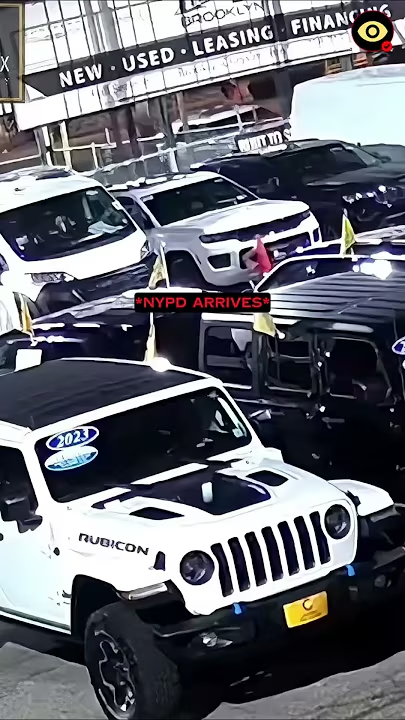 ▶Vehicle Tampering Caught on Camera at a Car Dealership, Police CalledWatch the case →
Get reliable, affordable security for your Los Angeles property.