
24/7 SECURITY
Live Video Monitoring for Storage Facilities
Self-storage live video monitoring means trained operators watch a facility’s cameras in real time and act while something is happening, instead of someone reviewing footage after a unit has been emptied. Monitex Security watches self-storage properties and warehouses around the clock, warns intruders through on-site speakers and calls police while they are still on the property. It suits quiet, lightly staffed sites where a gate code and a padlock are the only things between a thief and a row of units.
Key Takeaways
- A storage facility is easy to rob because it’s built to run without people: long rows, shared gate codes and no staff after the office closes.
- Recorded cameras show which unit was hit and when. Live operators can speak up while the person is still at the door.
- After closing, anyone on the property is treated as an intruder. During access hours, operators watch for behavior that doesn’t fit a tenant at their own unit.
- Monitex connects to the cameras a facility already has and adds speakers where they’re needed.
- Warehouses and distribution centers, the most targeted cargo theft sites in 2025 according to CargoNet, get the same live coverage on docks, yards and fence lines.
Self-Storage Live Video Monitoring, From the Gate to the Last Row
Self-storage live video monitoring puts a trained person behind your cameras every hour your facility is open or closed. When someone climbs the fence, cuts a lock or walks the rows trying doors, a Monitex Security operator sees it as it happens. The operator warns them over a speaker and calls police while they’re still on the property.
That’s the gap in most storage facility security: everything is built to record or to keep the honest people out. The keypad decides who gets in, the locks keep each unit closed and the cameras save the footage. Nobody is watching the screens at 2 a.m., and that’s when a person with bolt cutters has the place to themselves.
If your rows sit unwatched overnight, contact for inquiry and we’ll walk through your property with you.
Why Storage Unit Theft Is Hard to Catch on Recorded Cameras
There were 57,981 self-storage facilities in the U.S. in the 2025 Self Storage Almanac, up from 52,301 a year earlier (Radius+ data). Most of them share the same weak points:
- Nobody on site after hours. Many facilities run with one manager in the daytime and no one at night.
- Out-of-the-way locations. Industrial parks and highway frontage mean few passers-by and late notice of anything unusual.
- Rows with no sight lines. A person working on a door halfway down an aisle can’t be seen from the office or the street.
- Codes in many hands. Every tenant has a way in, codes get shared, and the gate stays open for the car behind.
- Unknown contents. A thief doesn’t know which unit is worth it, so one break-in often turns into several cut locks.
Recorded footage helps after the fact, with police reports and insurance claims. It doesn’t stop any of the above. Fire and water are risks too: a deserted property can burn or flood for hours before anyone arrives.
The solution: 24/7 Remote Monitoring
With every angle covered by our cameras we prevent break-ins, robbery and employee theft. We partner with low-voltage tech companies to install loudspeakers throughout your lot, using them to deter prospective criminals when suspicious activity is noticed.
At a fraction of the price of employing security guards, remote video surveillance is budget-friendly, no matter the size of your warehouse.
By connecting up your existing cameras to our systems*, getting started with Monitex is a quick, hassle-free process.
(*or installing new ones where necessary)
With shifts of highly trained virtual guards observing the screens every hour of the day, your facility is never exposed. Day or night, any time of year, your warehouse is under our watchful eyes.
Where Live Monitoring Fits in a Storage Facility Security System
A storage facility security system is usually built from the same parts. A fence and gate set the perimeter, a keypad or app decides who comes in, lighting keeps the aisles visible, tenants’ locks close each unit, and cameras record it all.
Each part has a known gap. Fences get cut, codes get passed around, and a disc lock still gives way to the right tool. An alarm or a motion sensor can tell you something moved, but not whether it’s a burglar or a raccoon. Each needless police trip also counts toward your city’s false alarm fines.
Live monitoring sits on top of those parts rather than replacing them. AI flags movement on the cameras, an operator checks it, and a person decides whether to speak, call you or call police. Your gate system, locks and staff stay as they are. For the monitoring center itself, see how our live video monitoring solutions work.
Self-Storage Security Cameras: Where Operators Look
Self-storage security cameras only help if they cover the places where trouble starts. These are the areas operators watch most closely on a typical site.
Area | What operators watch for | Camera tip |
Entry gate and keypad | A second car following through, a gate propped open, anyone climbing over | One camera on the keypad, one on the gate itself |
Fence line | Cutting, climbing or squeezing through, especially at the back | Cover the corners furthest from the office |
Drive aisles and unit rows | Cut locks, doors open after hours, people moving from unit to unit | A view down the length of each row, not across it |
Vehicle, boat and RV parking | Anyone at a stored vehicle after hours | Lighting at the far end, where catalytic converters and batteries go missing |
Office and leasing area | Break-ins after closing, the manager opening and closing alone | A camera on the office door and the path to the car |
Dumpsters and loading areas | Illegal dumping, people waiting out of sight | Wide view of the whole area |
Operators can also point out smoke or standing water they see on camera so you can act early. For locks, lighting, access control and the rest of a storage security plan, read our self-storage facility security guide.
After Closing vs. During Access Hours
Storage security has two different jobs, and self-storage real-time surveillance handles each one its own way.
After Closing
Once the gate locks for the night, nobody should be inside, so the rule is simple: anyone on the property is a concern. An operator who spots a person on camera challenges them over the speaker straight away. If they don’t leave, the operator calls police and keeps watching until officers arrive, so police get a current description, not a guess.
During Access Hours
During the day, tenants have every right to be there, so the operator looks at behavior instead of presence.
A tenant goes to one unit, loads the car and leaves. A thief walks the rows, tries doors, works on a lock, or spends a long time at a unit that isn’t theirs. When something doesn’t fit, the operator can speak to the person or alert your manager. This catches what a keypad can’t: someone who came in with a valid code and is doing something they shouldn’t.
Drive-Up, Climate-Controlled and Vehicle Storage
Monitoring adapts to the kind of storage you run.
- Drive-up units. Long outdoor rows are the classic target. Operators watch each aisle end to end, so a person halfway down a row is seen at once.
- Climate-controlled buildings. Interior hallways hide activity from the street and the office. Cameras at building doors, elevators and hallway corners let operators follow who goes where.
- Vehicle, boat and RV storage. Open lots of parked vehicles draw the same thieves as any parking lot: catalytic converters, batteries, trailers and fuel. Operators watch for anyone working on a vehicle or hitching up a trailer after hours.
- Container and yard storage. Portable containers and open yards often have little fixed security, so the gate and the yard edges matter most.
Simple Set-up
Getting started with Monitex security can be a matter of a few hours, and never more than a few days.
Quote
Our team analyzes your property and any existing security measures, giving you a custom quote for a strong surveillance plan.
Connect
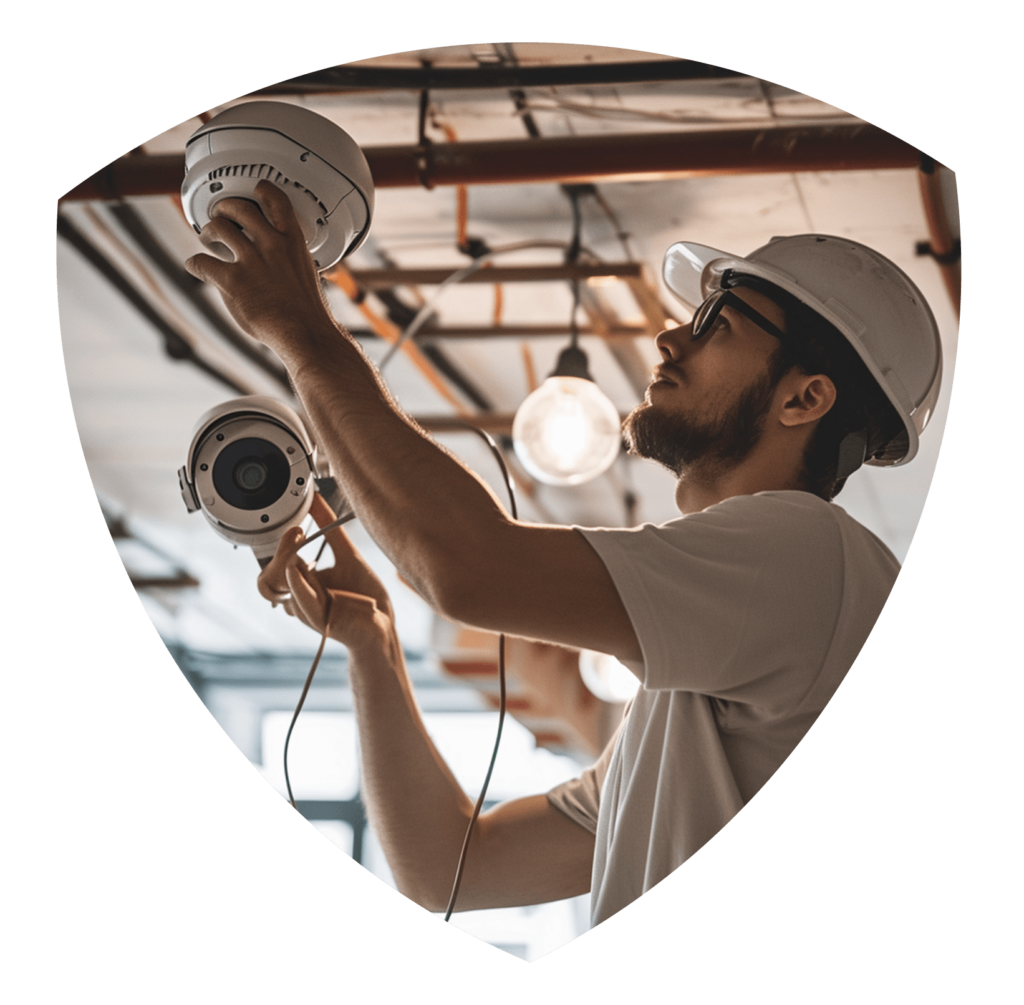
Our partnered low-voltage tech companies install speakers (and more cameras if necessary), connect your CCTV and configure it to integrate with our state-of-the-art system.
Stream
Streaming continuous live footage from your site, our remote guards watch out for threats and suspicious activity, reacting swiftly if anything is noticed.
Secure
They’ll issue warnings via loudspeaker, dispatch law enforcement where necessary and communicate closely with the police department to apprehend the criminals efficiently.
Relax
You’re free to focus on other aspects of your business, knowing that under the watchful eyes of our skilled team, your property is safe from damage or theft.
Protecting Tenants' Belongings and Your Facility's Reputation
Renters trust you with things that matter to them. When units get broken into, the cost isn’t just the damaged doors: it’s tenants who move out, reviews that warn others away and claims that take weeks to sort out.
Self-storage surveillance security helps on both sides of an incident:
- Before a break-in, visible cameras, speakers and an operator who speaks up make your facility a harder target than the one down the road.
- After an incident, timestamped footage shows what happened and who was involved, which helps police, your insurer and the tenant who reported the loss.
- When renters compare facilities, many advertise “video surveillance”. A facility with operators actually watching live has something concrete to point to.
Warehouse Security Monitoring for Docks, Yards and Distribution Centers
The same live coverage protects warehouses, where one building can hold more value than a storage facility holds across hundreds of units. Verisk CargoNet estimated cargo theft losses at nearly $725 million in 2025, up 60% from 2024. Warehouses and distribution centers were the most targeted locations, at 36% of incidents, and California and Texas together accounted for 58% of U.S. cargo theft, FreightWaves reported from CargoNet’s data. That’s why our California page leads with warehouses.
Operators focus on the places where goods leave:
- Loading docks and bay doors left open, trucks arriving after hours and anyone handling freight after the shift ends.
- Trailer and container yards, where a loaded trailer parked overnight is easy to hitch and drive off.
- Fence lines and roof access on large lots with plenty of quiet edges.
- Inside the building, where monitored cameras also discourage staff theft.
Two recent cases show how it plays out. In one, operators watched a group load an SUV behind a client’s warehouse late at night and called police while the loading was still going on. In another, a man forced his way into a warehouse and left with an item. The monitoring team passed his description to police, and officers found him within minutes, according to Monitex. For a fuller build-out of cameras, alarms and access control, see our guide to choosing a warehouse security system, or our notes on warehouse security monitoring in NYC.
What to Ask a Self-Storage Monitoring Provider
Before you sign with any monitoring company, ask these questions. Here’s how we answer them.
- Is a person watching live, or does the system only send alerts? At Monitex, AI flags movement and a trained operator checks every flag before anyone is warned or police are called.
- Can the operator speak to someone on site? Yes, through speakers at the gate and rows.
- What happens during access hours? Operators watch behavior, not just presence, so a tenant at their own unit isn’t treated as a threat.
- Do we have to replace our cameras? No. We connect the cameras you have and fill gaps only where needed.
- What do we get after an incident? A report with timestamped footage for police, your insurer and the tenant.
Running units for business tenants, such as contractors storing tools and stock? Our guide to commercial storage unit security covers the risks they face.
Keep Every Row Watched After Your Office Closes
Your gate, locks and cameras do their part during the day. Monitex operators cover the hours when nobody else is looking, at storage facilities and warehouses across the U.S. Contact for inquiry and tell us how your property is laid out.
Storage Facility Monitoring FAQs
Do operators watch during access hours or only at night?
Both. Operators watch your cameras 24/7. At night they treat anyone on the property as an intruder; during access hours they watch for behavior that doesn’t fit a tenant visiting their own unit.
Can you protect a facility with no manager on site?
Yes. That’s where live monitoring helps most. Operators cover the property whether or not staff are there, and they call police directly when needed, so an unstaffed facility isn’t left on its own.
Does live monitoring replace our gate access system?
No. Your keypad or app-based gate still controls who gets in. Live monitoring watches what happens after they do, and catches people who get in without using the gate at all.
How does this compare with a guard driving around the property?
A patrol guard sees one row at a time and is gone for most of the night. Operators watch every connected camera at once, all night, and can speak to an intruder within moments of spotting them.
Get reliable, affordable security for your storage spaces.