
Protect your jobsite
Construction Site Security Surveillance
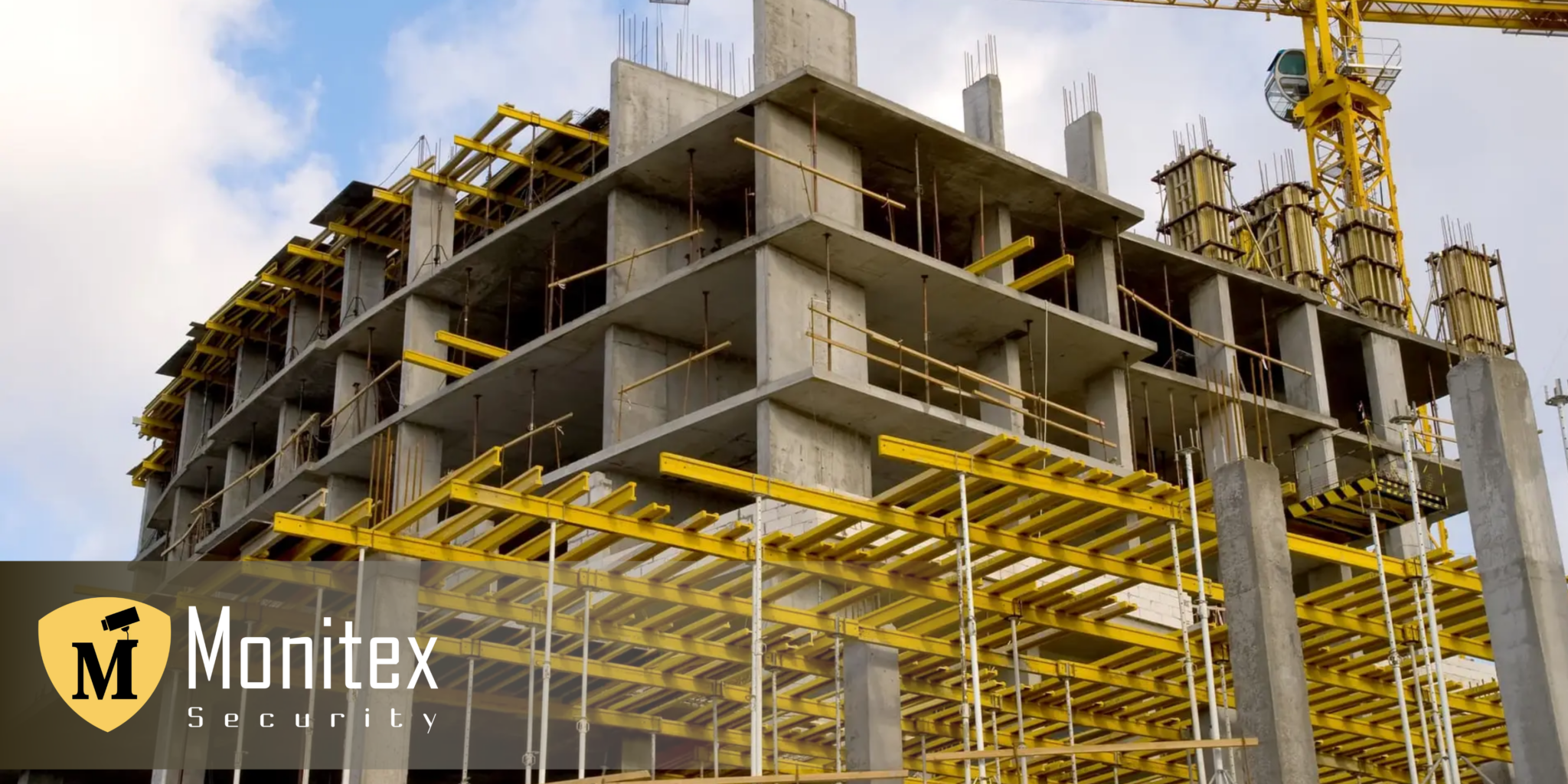
Construction site security surveillance is a camera system that protects a jobsite’s perimeter, materials and equipment, and it only stops theft when someone is watching it. Monitex Security sets up that system around your site, working with low-voltage partners or your own vendor to bring in power and internet, and connecting cameras and loudspeakers. Trained Monitex operators then monitor the cameras live, warn intruders over the speakers and dispatch police while the crime is still in progress. It’s built for general contractors, developers and construction managers who need their site protected after hours without a guard on every shift.
Key Takeaways
- Cameras on their own only record a theft. Monitex pairs your jobsite cameras with live operators who can stop it while it’s happening.
- Monitex coordinates power and network cabling through low-voltage partners or your vendor, so surveillance can start before permanent utilities arrive.
- Operators talk intruders off the site through loudspeakers and, if that fails, get police on the way with a verified description.
- Coverage is planned around the site’s gates, material yards and equipment, and it needs to follow the build as it moves from phase to phase.
- Timestamped footage gives you a record for police reports, insurance claims and liability disputes.
- Once cameras, power and internet are in place, setup typically takes a few hours and never more than a few days.
Construction Site Security Surveillance That Someone Is Actually Watching
Construction jobsites are an easy target. Expensive tools, materials and equipment sit on open ground, the site changes every few weeks, and once the crew leaves for the day, a dark, unsupervised site looks like easy pickings.
Most contractors respond by putting up cameras. Then something goes missing, and the footage shows exactly who took it. By the time anyone watches it, they’re long gone. Construction site security surveillance only works when it leads to a response. Monitex sets up surveillance around your site and puts trained operators behind every camera. They watch the feed live, use on-site loudspeakers to warn intruders, and dispatch police while the crime is still in progress.
Contact For Inquiry to get a free consultation and a custom surveillance plan for your site.
What a Construction Site Surveillance System Should Include
A jobsite system has more moving parts than cameras on a pole. Here’s what a complete setup covers, and how Monitex handles each part.
Component | What it does on a jobsite | How Monitex handles it |
Cameras | Cover gates, fence lines, material yards and equipment | Connected and configured to the Monitex monitoring system |
Loudspeakers | Let a live operator warn intruders by voice | Installed at key points around the site |
Power | Keeps cameras running before permanent utilities exist | Cabling run by our low-voltage partners or your preferred vendor |
Internet | Streams video off site to the monitoring center | Network cabling arranged the same way |
Live monitoring | Turns video into a response | Shifts of trained operators, every hour of the day |
Police coordination | Gets officers to a verified, in-progress incident | Operators dispatch and stay in contact with police |
Records and access | Evidence after an event; visibility for your team | Incident reports and mobile app access |
If any one of these is missing, the system has a gap. Cameras without power go dark. Cameras without a network can’t reach anyone. And cameras nobody watches are just recorders.
Choosing Cameras for a Construction Site
The right hardware depends on how big the site is, how dark it gets and how long the project runs. Most construction site video monitoring setups use a mix of:
- Fixed cameras trained on gates, trailer doors and other single points where you need a clear, close view.
- Pan-tilt-zoom (PTZ) cameras for wide yards and long fence lines, where an operator may need to follow someone across the site.
- Low-light or infrared cameras for perimeters that stay dark after hours.
- Loudspeakers placed where an intruder will actually hear the warning.
What matters most is that every camera gives the operator a clear picture at night and streams reliably to the monitoring center. During the site analysis, we look at your existing cameras first and recommend additions only where there’s a gap
Where to Point the Cameras on a Jobsite
Every site is different, but the same spots cause most losses. Construction site video surveillance should cover:
- Gates and site entrances, including vehicle access after hours.
- Perimeter fence lines, especially sections that face dark streets or empty lots.
- Material laydown yards where copper, lumber and fixtures are staged.
- Equipment parking, where excavators, loaders, generators and light towers sit overnight.
- Site trailers and storage containers holding tools.
- Openings into the structure, where trespassers get in, and get hurt.
A few habits make every camera more effective:
- Overlap the views, so there’s no gap an intruder can walk through. See our guide to camera coverage and placement.
- Light the areas that matter. Cameras and operators both need to see clearly at night.
- Mount cameras out of reach, so they can’t be knocked down or covered.
- Post signs at every entrance saying the site is under live surveillance. Signs deter people, and they tell visitors they’re being recorded. Check local rules on recording, especially audio, with your counsel.
Our solution: 24/7 Remote Video Surveillance For Construction Sites
With every angle covered by our cameras, we prevent theft, vandalism and trespassing. We also install loudspeakers around your jobsite, using them to deter prospective criminals when suspicious activity is noticed.
At a fraction of the price of employing security guards, remote video surveillance is budget-friendly, no matter the size of your construction jobsite.
We work with low voltage companies to get power and internet to your site so that we can install cameras and horns. Once we have cameras, power and internet, we’re good to go.
With shifts of highly trained virtual guards observing the screens every hour of the day, your property is never exposed. Day or night, any time of year, your site is under our watchful eyes.
Recorded, Self-Watched or Live: Three Levels of Jobsite Surveillance
Not all surveillance protects a site the same way. Most jobsites fall into one of three levels.
- Recording only. Cameras save footage to a recorder or the cloud. It’s useful after the fact, but it doesn’t stop anything, and on many sites the recorder is the first thing a thief takes.
- Self-monitored alerts. Cameras send motion alerts to a superintendent’s phone. In practice, that means someone deciding at 2 a.m. whether the movement is a raccoon or a trailer being hitched to your generator, then calling police themselves.
- Live, off-site security camera monitoring. A remote team watches the feeds in real time, verifies what’s happening, talks to the intruder through a loudspeaker and dispatches police. Whether you call it construction live video monitoring or construction live video surveillance, a person is on the other end, and it’s the level that can interrupt a theft while it’s in progress.
Monitex provides level three. For the basics of how a remote monitoring center operates, read remote video surveillance explained, and our comparison of remote video monitoring vs. alarm systems covers why sensor alarms fall short on open sites.
Planning Surveillance Around Each Phase of the Build
A camera layout that works during excavation won’t cover the site once the framing goes up. What’s worth stealing, and where it sits, changes with every phase.
- Site work and excavation. The perimeter is wide open, and heavy equipment, fuel and generators sit exposed overnight. Coverage focuses on gates, fence lines and the equipment staging area.
- Structure and framing. Lumber and steel arrive in bulk, and the rising structure gives trespassers places to hide and climb. Add views on material laydown areas and ground-level openings.
- Rough-in. Copper wire, pipe and HVAC equipment come on site. They’re easy to carry off and sell for scrap, so coverage moves to where they’re staged.
- Finishes and close-out. Fixtures, appliances and finished interiors are now inside the building. Entry points and the building envelope matter most.
During the consultation, our team analyzes your property and any existing security, then designs a surveillance plan and quote for the current phase. As the site changes, coverage should change with it.
Simple Set-up
Getting started with Monitex Live Security on your construction jobsite is quick and hassle-free. Our remote video surveillance setup process typically takes just a few hours and never more than a few days, ensuring your site is secured with minimal downtime after the construction live monitoring setup.
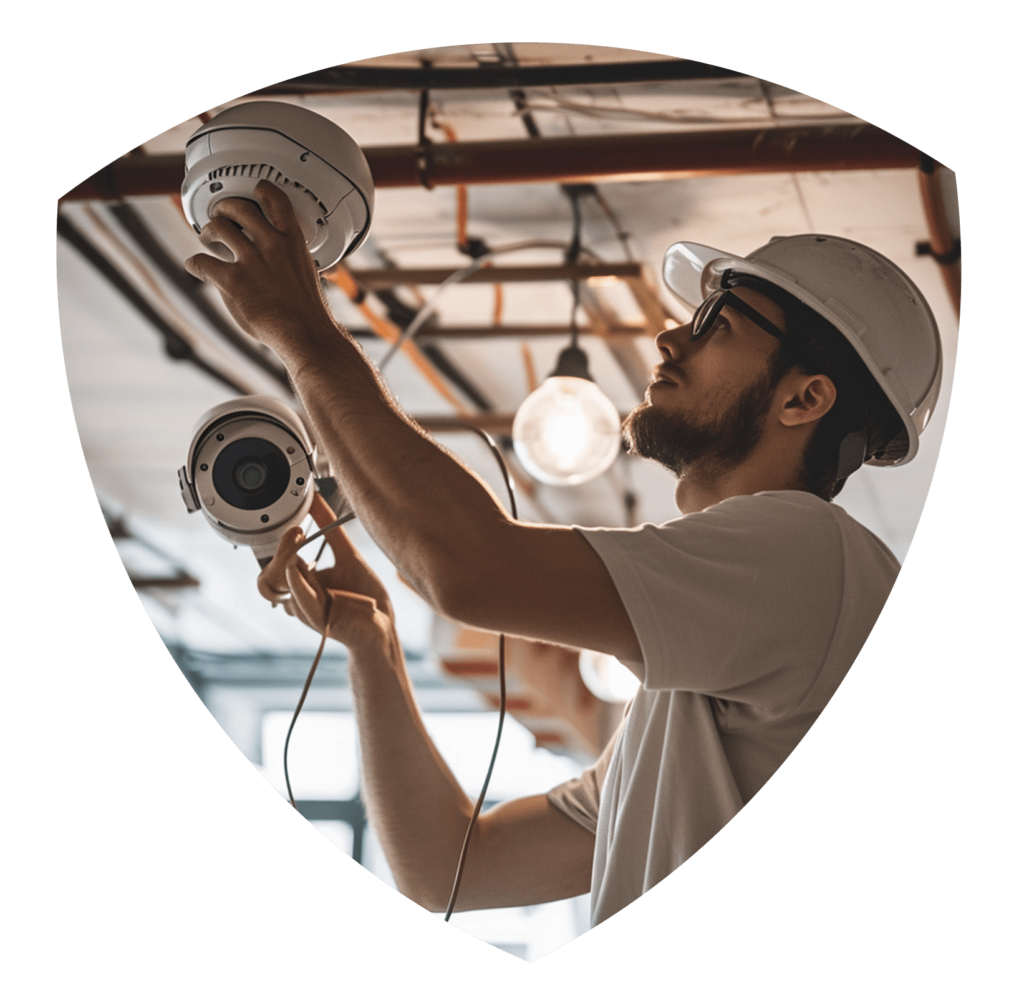
Our team analyzes your property and any jobsite existing security measures, giving you a custom quote for a strong surveillance plan.
We work with our low-voltage company partners, (or your preferred vendor) to install power and network cables. Our technicians can then install cameras and speakers, configuring them to integrate with our state-of-the-art video surveillance system for construction sites.
Streaming continuous live footage from your construction site, our remote guards watch out for threats and suspicious activity, reacting swiftly if anything is noticed in the area.
Our remote guards will issue warnings via loudspeaker, dispatch law enforcement where necessary and communicate closely with the police department to apprehend the criminals efficiently.
You’re free to focus on other aspects of your business, knowing that under the watchful eyes of our skilled team, your worksite is protected from damage and theft with our effective construction live monitoring.
What Happens When Someone Crosses the Fence
Real-time surveillance only matters if the response is fast and clear. When a camera picks up movement after hours, a Monitex operator:
- Looks. Checks the live feed to confirm it’s a person, not wildlife or a scheduled crew.
- Speaks. Uses the on-site loudspeaker to tell the person they’re on camera and need to leave.
- Sends help. Dispatches police with a description of who is there, where and what they’re doing, if the warning doesn’t work.
- Records. Documents the event with timestamped footage and an incident report for your team.
Police care about that first step. According to the Partnership for Priority Verified Alarm Response (PPVAR), a verified alarm is handled as a crime in progress and gets officers sent right away, while an unverified one can wait in the queue.
Some sites run crews overnight. Live surveillance protects the people as well as the property, because operators watch the perimeter while the crew works. Our guide to night-time construction site security covers protecting night shifts in more detail.
Surveillance as Your Project Record
Construction video monitoring doesn’t only stop theft. It also builds a record of your site that can protect you later.
- Trespass and injury claims. Active sites are full of hazards to anyone who wanders in. OSHA’s construction resources show just how many. If a trespasser is hurt, footage shows how they got in and what barriers and warnings were in place.
- Theft and insurance claims. Timestamped video supports police reports and gives your insurer clear evidence of what happened. More on that in cutting insurance claims with monitoring.
- Recovering stolen equipment. Keep a list of equipment serial numbers and register them with the National Equipment Register. Footage plus serial numbers gives police more to work with.
For a closer look at the legal side, read our guide to construction site liability.
The Cost of Surveillance Compared With Night Guards
Many contractors weigh live surveillance against a guard in a truck. The guard covers one spot at a time, and intruders can watch the patrol route and strike where the guard isn’t.
The cost gap is wide. The U.S. Bureau of Labor Statistics puts the median security guard’s pay at $38,020 a year (May 2025), before benefits, overtime and a guard company’s markup. A single post staffed day and night adds up to 168 hours a week, the workload of four-plus full-time guards. Live remote surveillance covers every camera at once, at a fraction of that price.
What drives the cost of construction site security monitoring:
- The number of cameras and the size of the site.
- The hours you need covered: overnight only, weekends, or 24/7.
- How much power and network cabling the site needs.
- How long the project runs.
See our live video monitoring cost guide for more detail, virtual security guard services for replacing or cutting guard hours, and where security guards fall short on large, open sites.
Get started today
with reliable, 24/7 live security monitoring for your construction jobsite.

Construction Site Security Surveillance FAQs
What does construction site security surveillance include?
A complete setup includes cameras covering the gates, perimeter, material yards and equipment; loudspeakers; power and internet for the site; live monitoring by trained operators; police coordination; and incident records. Monitex coordinates all of it, including power and network cabling through low-voltage partners or your vendor.
Do cameras alone stop construction site theft?
Rarely. Recorded cameras show what happened after the fact. Stopping theft takes someone watching in real time who can warn the intruder and dispatch police while they’re still on site.
Can surveillance run before the site has power or internet?
Yes. Monitex works with low-voltage partners, or your preferred vendor, to run power and network cables to the site. Surveillance can start once cameras, power and internet are in place, without waiting for permanent utilities.
How many cameras does a construction site need?
It depends on the site’s size, the number of gates, where materials and equipment are staged, and the current phase of the build. Our team analyzes the property and builds a surveillance plan and quote around it.
How quickly can monitoring start?
Once cameras, power and internet are in place, setup typically takes just a few hours and never more than a few days.