Arson is the crime of deliberately setting fire to property, or trying to. The FBI defines it as unlawfully and intentionally damaging, or attempting to damage, real or personal property of another person or entity by fire or an incendiary device. What separates arson from an accidental fire is intent. Most arsons are reported between 9 p.m. and 4 a.m., which is when empty buildings, closed jobsites and dark lots have nobody watching.
Key Takeaways
- Arson means setting a fire on purpose; intent is what makes it a crime rather than an accident.
- U.S. law enforcement reported 65,795 arson offenses in 2024, and businesses were the victim in 27.7% of cases with a known victim type from 2020 to 2024 (FBI).
- Intentional fires in nonresidential buildings reached an estimated 14,300 in 2023, with $349.1 million in losses (U.S. Fire Administration).
- Intentional acts are the most common cause of fires in vacant homes and apartment buildings.
- Fuel against walls, unsecured openings and hours with nobody watching are the three things owners can change.
Arson Meaning: How the FBI and State Laws Define It
Arson is setting fire to property on purpose. For national crime reporting, the FBI defines it as “to unlawfully and intentionally damage, or attempt to damage, any real or personal property of another person or entity by fire or incendiary device” (FBI, Arson Offenses 2015-2024). An attempt counts, so a fire that fizzles out against a door is still arson.
Intent is the dividing line. A cigarette dropped near a dumpster is careless; a lighter held to the same dumpster is a crime. Most states grade arson by what burned and who was at risk, with the heaviest charges for occupied buildings and lighter ones for empty structures, vehicles or brush. The degrees and penalties differ, so check your state’s rules if a fire on your property is ruled intentional.
For a property owner, the legal label matters less than the pattern behind it. Arson tends to happen where people can get in unseen, where something will burn easily and where nobody will notice for a while. Those are conditions you can change, and if you want a second look at your own buildings, contact for inquiry.
How Often Arson Hits Businesses
Arson is a regular business loss, not a rare event. Law enforcement agencies reported 65,795 arson offenses in 2024, down from 69,295 in 2023 and 69,886 in 2022, the highest year on the FBI’s record. From 2020 to 2024, businesses were the victim in 27.7% of arsons where the victim type was known, second only to individuals (FBI).
Fire departments see the same trend in commercial buildings. The U.S. Fire Administration estimates 14,300 intentional fires in nonresidential buildings in 2023, causing $349.1 million in losses, up from 8,800 such fires in 2014 (USFA).
Big cities track it closely. In New York City, FDNY fire marshals counted 802 intentionally set fires in fiscal 2025 (July 2024 to June 2025), down from 919 the year before and 1,153 in fiscal 2022 (Mayor’s Management Report, FDNY). That is still more than two deliberate fires a day across the five boroughs.
When and Where Fires Get Set
Arson is mostly a night crime. In the FBI’s 2020 to 2024 data, the hours from 9 p.m. to 3:59 a.m. had the most reported arsons on every day of the week. Parking lots, drop lots and garages accounted for 6.9% of all arson offenses.
Vacant buildings carry the highest risk. In the U.S. Fire Administration’s most recent study of vacant residential buildings (2013 to 2015, published 2018), intentional acts were the most common cause of their fires, at 34% (USFA). The report is several years old, but no newer national study of vacant building fires exists.
Cities see the same pattern today. The Seattle Fire Department counted 77 vacant building fires in 2021, 91 in 2022 and 130 in 2023, and the city then moved to speed up demolition of unsafe vacant buildings (Seattle Fire Department). Owners of empty properties in Washington and elsewhere face that risk every night a building sits dark.
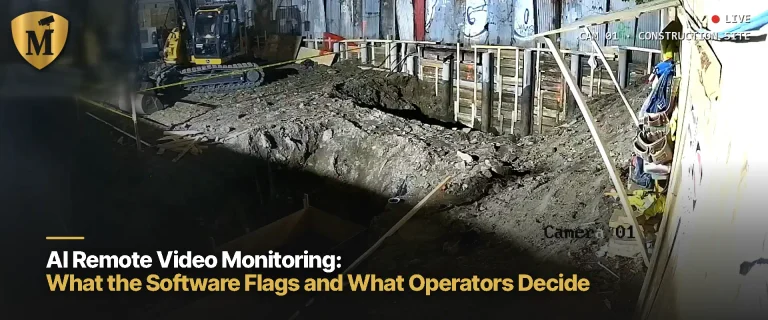
Construction sites are another target. They’re open-framed, full of lumber and packaging, and empty after the crew leaves. The USFA’s 2023 intentional fire figures include a construction site fire in Aurora, Colorado, reported at $53 million in losses.
Warning Signs Before a Fire Is Set
Many arsons follow smaller problems that went unnoticed. These are worth treating as early warnings:
- Scorch marks, burned trash or small fires in dumpsters, stairwells or doorways
- Boards pried off a vacant unit, or a door that was locked and now isn’t
- People on the property after hours, especially around entrances, loading docks or the back of a building
- Graffiti, broken lights or cut fencing at a closed site
- Pallets, cardboard or debris piled against an exterior wall
A small fire that burns itself out is often the first attempt. Each of these signs means someone has been on the property, or that fuel is waiting next to the building.
How to Lower the Risk at Your Property
Arson prevention comes down to three things: less fuel, fewer ways in and someone who notices.
- Move fuel away from walls. Keep dumpsters, pallets, scrap lumber and cardboard bales away from the building, and empty them on a schedule.
- Close the openings. Secure doors, windows and crawl spaces on vacant units, and repair fencing and gates on jobsites the day they’re damaged. Our guide to vacant property surveillance covers the first steps for an empty building.
- Light the approaches. Entrances, loading docks and the sides of a building where someone could stand unseen need lighting that stays on.
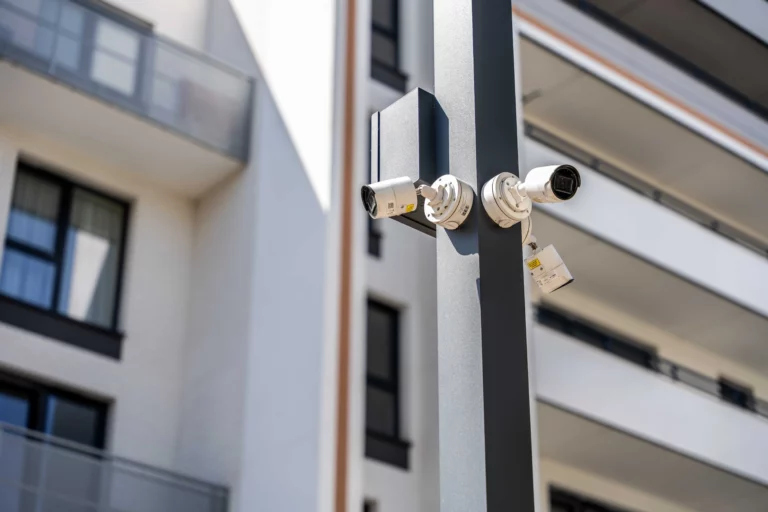
- Watch the hours that matter. Cameras that only record show an investigator what happened. Live construction site security monitoring means someone sees the person at the fence, or the first flame, while there’s still time to act. The same applies to apartment buildings with vacant units between tenants.
- Report small fires. Tell the local fire department or fire marshal about every intentional-looking fire, even a minor one, so a pattern gets on record.
What a Live Operator Changes When a Fire Starts
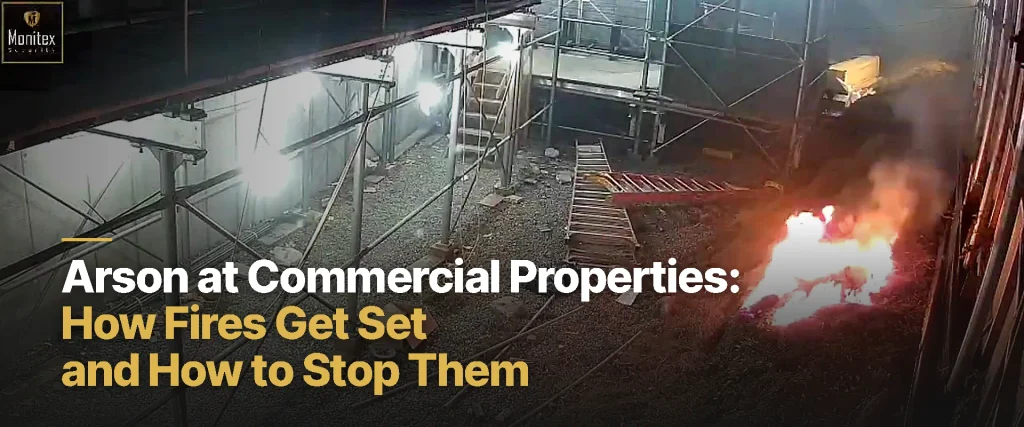
Speed is what decides how much burns. On a construction site we were monitoring at night, operators watching the cameras spotted a small flame on a slope beside the scaffolding. The footage shows it spreading across the slope before fire trucks arrive and firefighters put it out. According to Monitex, the fire was contained before it reached the rest of the build. The video doesn’t show how that fire started. The response is the same either way: someone sees it early and calls for help.
With live monitoring, an operator can also speak through on-site speakers to a person near a dumpster or a boarded door before anything is lit. That warning, and a call to police with a description of what the camera shows, is often enough to end the visit.
Keep Watch on Empty Buildings and Job Sites With Monitex Security
At Monitex Security, trained operators keep live watch on your property’s cameras around the clock. When someone shows up at a vacant building or a closed jobsite, they warn the person through on-site speakers, call police or the fire department, and send you a report with timestamped video. We can connect your existing cameras or set up new ones. Read how live video monitoring would cover your site, or contact for inquiry.