
Last updated:
When a security alarm triggers, the video alarm verification process is what separates a genuine emergency response from a wasted police dispatch. Instead of relying solely on a sensor signal, trained monitoring agents review live or recorded footage before deciding whether to escalate the alert to law enforcement.
Key Takeaways
- Video alarm verification drastically reduces false alarm dispatches, which account for the vast majority of alarm-related police calls nationwide.
- Monitoring agents review camera footage within seconds of a trigger, allowing them to confirm real threats before contacting authorities.
- Verified alarms receive priority response from law enforcement compared to unverified sensor-only alerts.
- The process works across residential, commercial, and industrial properties regardless of building size or complexity.
- Integrating motion-aware cameras and smart sensors strengthens verification accuracy and reduces gaps in coverage.
- Choosing a provider with round-the-clock, professionally staffed monitoring centers is the single biggest factor in how well verification works in practice.
False alarms are a serious problem for law enforcement agencies across the United States. According to the Security Industry Association, a significant share of all burglar alarm calls result in no criminal activity found on arrival. This strains police resources, generates fines for property owners in many cities, and erodes the credibility of alarm systems overall. The video alarm verification process was developed specifically to address this gap between sensor activation and confirmed criminal activity.
How the Verification Sequence Unfolds After an Alarm Triggers
Understanding the step-by-step sequence helps you appreciate how much work happens in the background before any response is initiated.
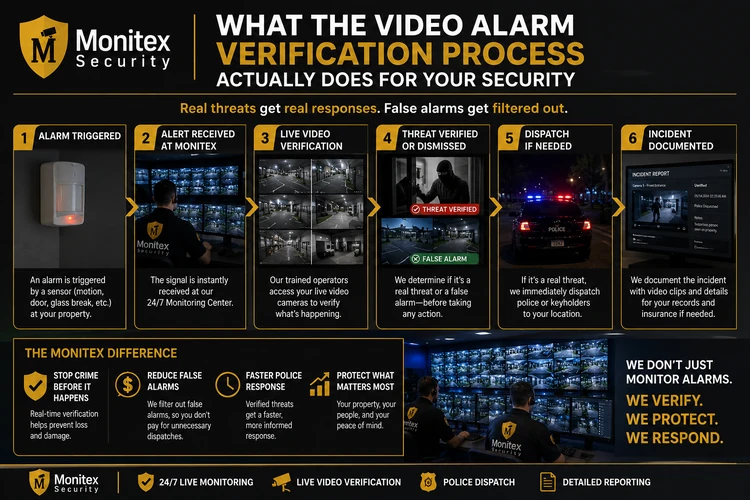
Step 1: Sensor Activation and Initial Signal
The process begins the moment a sensor detects an anomaly. This could be a motion detector, a door contact, a glass-break sensor, or a combination of multiple inputs. The signal travels from your property’s alarm panel to the monitoring center via cellular, broadband, or a hybrid communication path. Modern systems transmit this signal in seconds.
Step 2: Camera Footage Review by Monitoring Agents
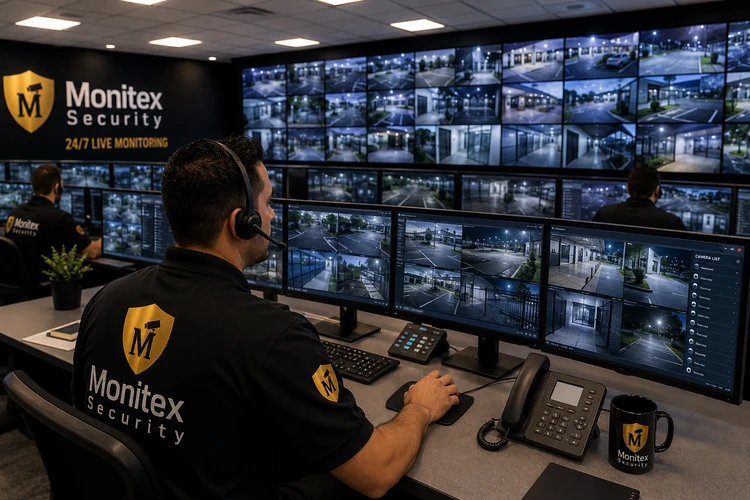
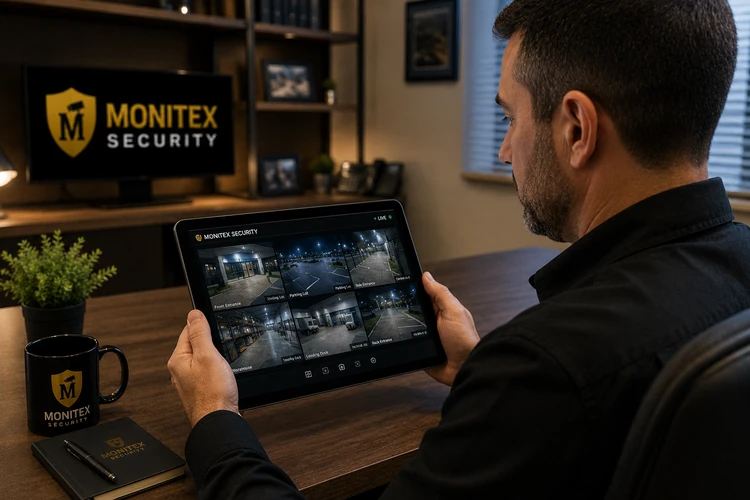
This is the core distinction between traditional alarm monitoring and verified alarm response. As soon as the signal arrives, a trained monitoring agent pulls up the associated camera feed. Depending on the system design, they may view a short clip that was automatically recorded the moment the sensor fired, or they may access a live stream to assess what is happening in real time.
The agent looks for visual confirmation of a genuine threat: a person where there should not be one, property damage in progress, or physical confrontation. They also look for obvious non-threats such as a pet tripping a motion sensor or a window left open by a gust of wind. This distinction is what prevents an unnecessary police dispatch.
Step 3: Escalation or Cancellation
If the agent confirms suspicious or criminal activity, they escalate immediately. Escalation typically involves calling law enforcement and providing them with a real-time description of the subject, their location on the property, and any available physical details from the video feed. Some monitoring centers can transmit clip footage directly to responding officers.
If the footage shows no credible threat, the agent may still attempt to reach you or a designated contact through a two-way audio check or a phone call before closing the event. This layered approach means very few confirmed incidents slip through without action.
For a closer look at how this connects to broader camera-based protection, the remote video surveillance systems process outlines how live monitoring and video analytics work together to keep properties secure.
Step 4: Documentation and Reporting
Every verified alarm event is logged. The agent notes the time of trigger, footage reviewed, who was contacted, and the outcome. This documentation matters for insurance claims, police reports, and your own security audits. Reputable providers retain this data for a defined period so you can retrieve it if needed.
Why the Technology Behind Verification Has Improved Dramatically
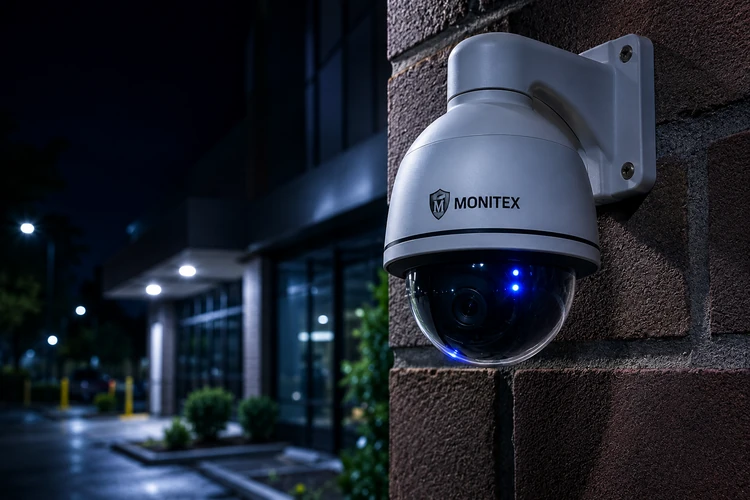
Early video verification relied on low-resolution cameras and slow network connections that made reviewing footage frustrating and often inconclusive. Today’s systems use high-definition cameras, edge computing, and AI-assisted motion analytics to give agents much clearer footage much faster.
Motion-aware cameras, for example, can filter out irrelevant movement such as tree branches or passing vehicles before a sensor signal is even sent. This pre-filtering reduces the number of events agents need to review, which allows them to focus on the calls that genuinely need attention. Businesses that understand the advantage of motion tracking security camera for business are able to dramatically cut down on nuisance activations while improving detection accuracy.
Additionally, two-way audio built into modern camera units allows monitoring agents to speak directly to individuals on your property. In some cases, this audio deterrent alone has been enough to cause a would-be intruder to leave before any damage occurs, reducing harm and avoiding the need for police response entirely.
AI-assisted analytics are also being used to classify the type of motion detected. Systems can differentiate between a human silhouette, a vehicle, and an animal based on shape, size, and movement pattern. This level of pre-classification arrives at the monitoring center alongside the sensor signal, giving agents additional context before they even open the camera feed.
For more context on how verified monitoring works within a broader security strategy, the protection insights blog covers emerging technologies and best practices that property owners across the country are adopting.
How Verified Alarms Affect Law Enforcement Response Priority
One of the most practical benefits of the video alarm verification process is the response priority shift it creates with local police departments. Many jurisdictions in the United States have adopted what is called “verified response” policies, where officers deprioritize or in some cases decline to respond to unverified alarm calls altogether. Cities including Salt Lake City, Utah, and Las Vegas, Nevada, have experimented with or adopted these policies at various points, reflecting a broader trend driven by false alarm call volumes.
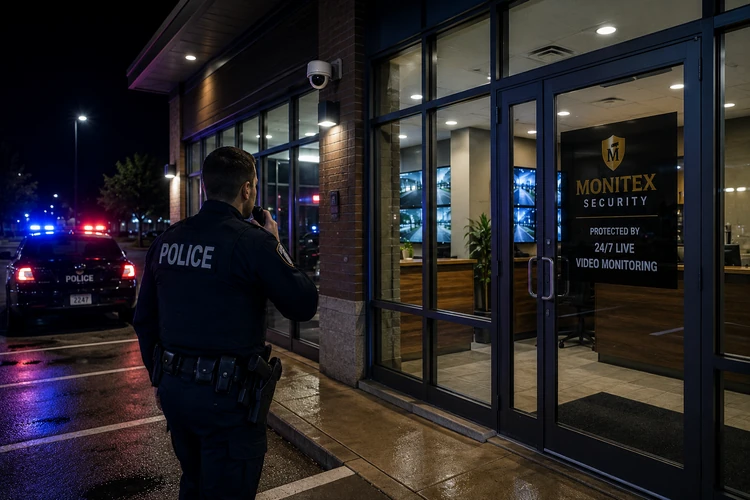
When your alarm is verified through video, it moves into a different category. Officers treat it as a credible in-progress event rather than a probable false alarm. This can mean the difference between a rapid response and a delayed or ignored call.
According to FEMA’s guidance on emergency communications, reducing unnecessary emergency dispatches is a national priority that benefits both public safety agencies and communities. Verified alarm systems align directly with that goal.
The professional alarm monitoring services offered by established providers are designed with these law enforcement relationships in mind, ensuring that when a verified signal goes out, it carries the weight that gets officers moving quickly.
Comparing Verified vs. Unverified Alarm Systems
The table below breaks down the practical differences between traditional sensor-only alarm systems and systems that include the video alarm verification process.
| Feature | Sensor-Only Alarm | Video-Verified Alarm |
| Police dispatch basis | Signal alone | Confirmed visual evidence |
| Average response priority | Low to medium | High (treated as in-progress) |
| False alarm rate | High | Significantly lower |
| Municipal fine exposure | Higher | Reduced |
| Agent review capability | None | Live or recorded video review |
| Two-way audio deterrence | Rarely included | Often integrated |
| Documentation for insurance | Basic event log | Time-stamped video plus log |
| Operator training requirement | Standard | Advanced, camera-specific |
What to Look for When Choosing a Verified Alarm Provider
Not all verification systems are built the same way. Here are key factors to evaluate before committing to a provider:
- Camera placement and coverage. Sensors need corresponding cameras. A sensor at a back door with no camera nearby cannot be verified. Walk through your property layout with your provider before installation.
- Monitoring center staffing levels. Verification only works if agents are available to review footage quickly. Ask about average response times during peak hours and overnight.
- Video storage and retrieval policy. Know how long footage is retained and whether you can access it independently in the event of a legal dispute.
- AI analytics integration. Pre-classification of motion events reduces agent workload and speeds up verification. Confirm whether your system includes this layer.
- Communication protocol with law enforcement. Ask specifically how the provider contacts authorities and whether they have established relationships with local departments in your area.
- Redundancy and uptime guarantees. A monitoring center that goes offline during a power outage leaves you unprotected. Look for providers with backup power and redundant communication paths.
Monitex Security, serving clients across New York and nationwide since 2019, builds its verification systems with all of these factors addressed, and with a team of 200 professionals and round-the-clock monitoring capability, the approach to verified alarm response prioritizes confirmed accuracy over fast but unreliable dispatch decisions.
The Role of Regulations and Industry Standards in Verification
The alarm industry in the United States is partially regulated at the state and local level, with some jurisdictions requiring verified response before dispatching officers. The Electronic Security Association and other industry bodies have developed standards that define what constitutes a credible verified alarm, including documentation requirements and agent qualification benchmarks.
The National Institute of Standards and Technology (NIST) has also contributed frameworks for physical security systems that inform how monitoring centers should handle data, privacy, and access control in the context of video verification.
From a liability standpoint, operating a commercial property with an unverified alarm system in a jurisdiction that has adopted verified response policies can leave you without police coverage when you need it most. Understanding local ordinances before selecting your alarm system is not optional; it is a foundational part of responsible security planning.
For business owners evaluating their options, the NIH guide to workplace safety and security considerations offers broader context on how security infrastructure integrates with employee and operational safety frameworks.
Practical Scenarios Where Video Verification Made the Difference
Consider a retail store in New York City where a rear door sensor fired at 2:00 a.m. Without video verification, the monitoring center would have dispatched police based on the signal alone, a call that may have been deprioritized due to the location’s history of false alarms. With video verification, the agent confirmed two individuals attempting to force the door, provided real-time descriptions to responding officers, and the suspects were apprehended before entering the building.
In another scenario, a warehouse with a motion sensor covering a large open floor was triggered repeatedly by HVAC system vibrations. A traditional alarm response would have resulted in multiple police dispatches and fines. Video verification allowed agents to identify the non-human source within seconds, canceling each event without unnecessary escalation.
These types of real-world situations reflect why the video alarm verification process has become a baseline expectation rather than a premium add-on for serious security installations.
Things to Know
- Many U.S. municipalities have adopted ordinances that fine property owners for repeated false alarm dispatches. A single verified system can eliminate most of that exposure within the first year of operation.
- Video verification is not the same as simply having cameras installed. The cameras must be actively monitored by trained agents who are authorized to escalate to law enforcement on your behalf.
- Response time from sensor trigger to agent review matters enormously. Ask any prospective provider what their average verification review time is during off-hours, not just during business hours.
- Two-way audio is an underutilized component of many verified alarm systems. Agents who can speak directly to intruders through a camera speaker have successfully deterred incidents without requiring police dispatch at all.
- Your insurance provider may offer reduced premiums for properties with verified alarm systems. Contact your insurer directly and ask whether video verification qualifies for a discount under your current commercial or homeowners policy.
- Privacy considerations apply when cameras cover shared or semi-public spaces. Consult with a legal advisor familiar with your state’s recording consent laws before finalizing camera placement, particularly in states with stricter two-party consent requirements.
Talk to a Monitex Security Expert Before Your Next Alarm Decision
Your property deserves more than a sensor that fires into the void and hopes for the best. Monitex Security’s verified alarm systems are built around confirmed, camera-backed response protocols that give law enforcement a real reason to move fast. Contact Monitex today at 929-279-4999 or email [email protected] to schedule your contact and find out exactly which verified alarm configuration fits your property, your budget, and your local law enforcement environment. Take the next step now: reach out to the Monitex team and get a clear, no-pressure assessment of what verified protection looks like for your specific situation.
Frequently Asked Questions
Q: How long does the video alarm verification process take from trigger to police dispatch?
In most modern monitoring centers, the full sequence from sensor trigger to verified police dispatch takes between 30 seconds and two minutes depending on footage clarity and agent availability.
When an alarm fires, the signal reaches the monitoring center within seconds via cellular or broadband. The agent then pulls up the relevant camera feed, assesses the footage, and makes a dispatch decision. Systems with AI-assisted pre-classification can reduce agent review time significantly because much of the initial sorting has already been done by the time a human looks at the screen.
Q: Does video alarm verification work for residential properties or only commercial buildings?
Video alarm verification works equally well for residential properties, and homeowners across the United States are increasingly adopting it as a standard part of their home security setup.
The underlying technology, including high-definition cameras, motion-triggered recording, and 24/7 monitoring center access, scales down to single-family homes without any loss of core functionality. The main difference is camera placement strategy. Residential installations typically focus on entry points, driveways, and common areas rather than the wide-area coverage required by large commercial spaces.
Q: Will my local police department actually respond faster to a verified alarm call?
Yes, in most jurisdictions a verified alarm call is treated as a confirmed in-progress event, which places it in a higher response priority category than an unverified sensor-only signal.
Many U.S. cities have formal or informal verified response policies that deprioritize unverified alarm calls due to the historically high false alarm rate associated with them. When a monitoring agent confirms visual evidence of a threat and communicates that confirmation to dispatch, officers treat the call with the same urgency as a direct 911 report from a witness. This priority shift is one of the most tangible operational benefits of choosing a verified system over a traditional one.
Q: What happens if the camera footage is too dark or unclear for an agent to make a determination?
If footage is inconclusive due to poor lighting or camera angle, the agent typically attempts to reach the property owner or a designated contact before making a dispatch decision.
This is why camera placement and image quality are non-negotiable parts of a properly designed verified alarm system. Infrared night vision, wide dynamic range imaging, and strategic positioning relative to light sources all contribute to footage that remains usable in low-light conditions. Providers who cut corners on camera specifications will produce systems that fail exactly when you need them most, which is at night or in low-visibility conditions.
Q: Can a video-verified alarm system be retrofitted onto an existing security setup?
In many cases, yes, existing alarm panels and sensor networks can be upgraded with compatible cameras and monitoring software without requiring a full system replacement.
The feasibility depends on the age and communication protocol of your existing panel, the wiring infrastructure already in place, and whether your current monitoring provider supports video verification as an add-on service. A professional site assessment is the most reliable way to determine what can be retained and what needs to be replaced. Providers like Monitex Security conduct these assessments as part of the onboarding process so you get an honest picture of retrofit costs before committing to any contract.
The Bottom Line on the Video Alarm Verification Process
The video alarm verification process is no longer a niche upgrade reserved for high-security facilities. It has become the practical standard for any property owner who wants law enforcement to take their alarm seriously and respond with urgency rather than skepticism. The combination of camera-backed confirmation, trained agent oversight, and real-time communication with police departments creates a fundamentally more reliable security outcome than any unverified sensor network can deliver on its own.
If you are evaluating security options for a home, a retail location, a warehouse, or any other property across New York or nationwide, start by asking whether your current or prospective system includes true verified response. Call Monitex Security at 929-279-4999, email [email protected], or visit the team online to request your inquiry consultation and get a clear, property-specific answer on how verified alarm monitoring can work for you.