
Last updated:
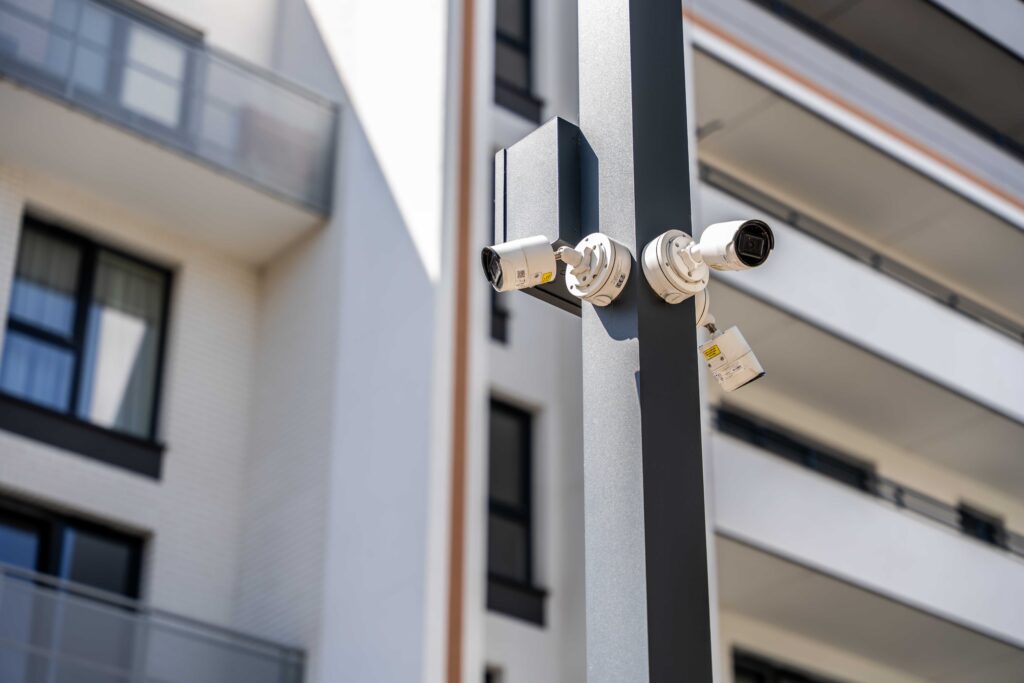
Multi-family residential security solutions protect apartment buildings and communities by combining access control at entrances, video surveillance of common areas, package and visitor management, and live monitoring by trained operators. The goal is to cover the shared spaces where most problems start, such as lobbies, garages, stairwells and package rooms, and to respond while an incident is happening rather than discovering it the next morning.
Key Takeaways
- U.S. households experienced about 13.6 million property crimes in 2023, and only about 3 in 10 were reported to police.
- In multi-family buildings, most problems start in shared spaces: lobbies, garages, stairwells, rooftops and package rooms.
- A complete multi-family security system layers access control, cameras, live monitoring and package and visitor handling.
- Cameras should cover common areas only, never the inside of residents’ homes.
- Residents accept security upgrades more readily when management explains them first.
Multi-Family Apartment Security: A Guide to Residential Security Solutions
For owners and property managers, keeping residents safe is part of keeping a building full. It’s also harder than it looks. U.S. households experienced about 13.6 million property crimes in 2023, and only about 3 in 10 were reported to police, according to the Bureau of Justice Statistics. In an apartment building, that means plenty of incidents never reach the manager’s desk until they become a pattern.
This guide covers the security challenges multi-family buildings face, the key components of multi-family security systems, the features residents of premium apartments expect, and practical tips for putting a plan in place. If you’re reviewing security at your property, contact for inquiry and we’ll talk it through.
The Security Challenges of Multi-Family Buildings
Multi-family properties never fully close. That creates risks single-tenant buildings don’t have:
- High traffic. Residents, guests, couriers and contractors come and go at all hours, and every one of them is a chance for someone to follow through the door.
- Shared spaces. Lobbies, stairwells, rooftops, gyms and pools are used by everyone and watched by no one for most of the night.
- Package rooms and mail areas. Deliveries pile up where anyone who gets inside can reach them.
- Garages and parking lots. Vehicle break-ins and people hanging around cars.
- Vandalism and misuse after hours. Damage to amenities and common areas adds repair costs and frustrates residents.
- Problems no one reports. Residents often don’t report thefts or suspicious activity, so managers find out late.
Key Components of Multi-Family Security Systems
1. Live Video Surveillance
Cameras in common areas are the base of any multi-family security system. On their own, they record. With live video monitoring, trained operators watch those cameras in real time and step in while something is happening: a stranger trying doors, a party on the roof, someone going through the package room. Operators can warn people over on-site loudspeakers, alert building management, or dispatch police and guide officers to the exact spot.
2. Multi-Family Access Control
Multi family access control decides who gets into the building and which areas they can reach. Common setups include key fobs or codes for residents, intercoms for visitors, separate access for amenities and the package room, and logs of every entry. Pairing access control with cameras lets operators see who is at the door before it opens. Our remote access control manages entry points remotely.
3. 24/7 Real-Time Surveillance
Most incidents happen when the leasing office is closed. Real-time surveillance around the clock means trained operators work in shifts, so the building is watched every hour of every day, including nights, weekends and holidays. Operators also notice what residents rarely report, like a door propped open every night or the same car circling the garage, so managers can fix the pattern before it turns into an incident.
4. Package and Visitor Management
Lobbies need someone to let guests in, handle deliveries and keep the package room secure. A remote doorman service does that remotely: operators screen visitors, control lobby access, log deliveries and help prevent package theft, without staffing a desk around the clock.
5. Privacy and Tenant Communication
Residential surveillance has firm limits. Cameras should cover common areas such as entrances, lobbies, hallways, garages and amenities, never the inside of residents’ homes. Post notices so residents and visitors know the property is monitored, and check your state’s rules before recording audio, since many states require everyone’s consent to record a conversation. Explaining upgrades before they go in helps residents accept them; our guide to talking to tenants about security upgrades covers how.
Premium Apartment Security Features
Residents of premium and luxury apartments tend to expect security that feels like a service, not a barrier:
- A staffed-feeling lobby, with visitors greeted and screened, whether by a doorman or remotely.
- Secure package handling, with a controlled package room or managed deliveries.
- Controlled amenities, so pools, gyms and rooftops are open to residents only.
- Covered garages and parking, with cameras on entrances, rows and elevators.
- Fast, discreet response when something happens, without residents having to step in.
Our guide to luxury apartment security goes deeper on high-end expectations.
Benefits of Strong Multi-Family Security Solutions
- Resident retention. People renew where they feel safe in the lobby, the garage and the hallway.
- Lower vandalism and repair costs. Problems caught as they happen cost less than damage found the next day, which makes asset protection a budget issue as much as a safety one.
- Reduced liability exposure. A documented, monitored approach to security shows the property takes reasonable care.
- Coverage without a guard at every door. Remote monitoring covers many cameras at once, instead of one guard covering one post.
Implementation Tips for Property Managers
- Walk the property at night. Note dark areas, propped doors, broken locks and blind spots.
- Prioritize shared spaces. Start with entrances, the package room, garages and stairwells.
- Fix access first. Make sure doors close and lock, codes are current and former residents’ fobs are deactivated.
- Cover the right areas with cameras. Common areas only, with clear views of faces at entrances.
- Decide who responds after hours. Cameras without a response plan only document problems.
- Tell residents what’s changing and why, before it goes in.
- Review regularly. Check camera views, access logs and incident patterns every few months.
For more on choosing a provider, see our guide to remote video monitoring for property managers.
Keep Your Residents Safe With Monitex Security
Monitex Security watches multi-family buildings and communities live, every hour of the day:
- Eyes on shared spaces. Operators watch lobbies, entrances, garages, stairwells and package rooms.
- A voice on site. Loudspeakers let operators warn trespassers before a problem grows.
- Police to the exact spot. If someone won’t leave, operators call police and guide them to where the person is.
- Access and packages handled. Remote doorman and access control work with the same team watching your cameras.
See our residential building video surveillance, or contact for inquiry and we’ll walk through your property with you.