
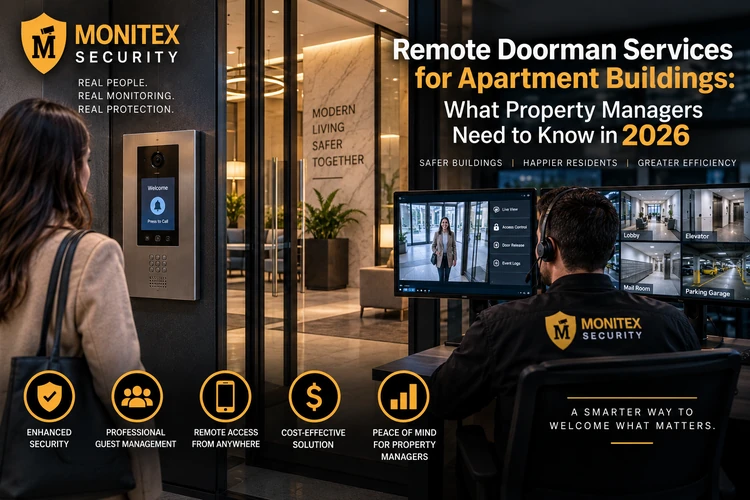
Remote doorman services for apartment buildings allow properties to provide professional, 24/7 entry management through live video monitoring and two-way audio, without stationing a physical doorman at the front desk around the clock. This approach has become a practical solution for building owners who want to maintain security standards while reducing labor costs and staffing overhead through services offered by providers like .
Key Takeaways
- Remote doorman systems combine live video monitoring, two-way audio, and remote access control to manage building entry without full-time on-site staff.
- Properties of all sizes, from boutique walk-ups to mid-rise residential buildings, can benefit from this technology.
- The cost is typically lower than hiring full-time doormen, especially when factoring in benefits, overtime, and sick coverage.
- Integration with smart locks, intercoms, and access control platforms makes implementation straightforward for most existing building setups.
- Working with a professional security provider ensures the system is monitored by trained personnel, not just automated software.
- Tenant satisfaction tends to stay high when the remote interaction is handled promptly and professionally.
Why More Apartment Buildings Are Moving Away from Traditional Doormen
Hiring and retaining full-time doormen in cities like New York is expensive. Wages, benefits, union dues, overtime, and coverage for absences add up quickly. For many mid-size and smaller residential buildings, a traditional 24/7 doorman simply is not financially viable.
At the same time, tenants still expect a certain level of access management. They want package handling coordination, visitor screening, and a point of contact when something goes wrong at the entrance. Leaving a building completely unstaffed creates real liability and security gaps.
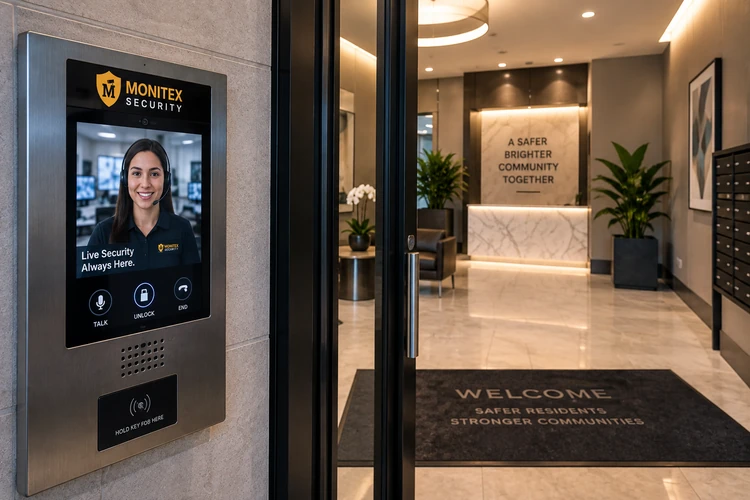
Remote doorman services for apartment buildings sit in the middle of these two realities. They deliver professional entry management through a combination of cameras, intercoms, smart locks, and live agents who monitor and respond in real time, all without the overhead of a physical staff member sitting at the front desk.
According to the U.S. Bureau of Labor Statistics, doormen and security personnel are among the roles most affected by rising minimum wage legislation and labor market pressures in major metro areas, as discussed in detail on the protection insights blog. That trend is pushing more property managers toward technology-assisted alternatives.
How Remote Doorman Systems Actually Work
The mechanics of a remote doorman setup are more straightforward than many property managers expect. Here is the typical workflow:
- Visitor arrives at the building entrance and presses the intercom or video call button.
- A live remote agent receives the call, sees the visitor via camera feed, and speaks with them through two-way audio.
- The agent verifies the visitor’s identity or checks them against an approved list provided by the tenant.
- The agent grants or denies access by triggering an electronic door release remotely.
- The interaction is logged with timestamps, video clips, and notes for building records.
This process happens in seconds. For tenants, the experience feels similar to speaking with an in-person doorman, except the agent is working from a monitoring center rather than a lobby desk.
For a closer look at how this type of system is priced and structured, the virtual security guard services cost and how it works breakdown is a useful reference for property managers who are comparing options.
Buildings can also integrate their existing intercom systems, key fob readers, or smart lock platforms into the remote monitoring infrastructure, supported by providers offering total service and support. This means you do not always need to replace your current hardware from scratch. Compatibility varies by provider, so it is worth discussing your building’s existing setup during the initial consultation.
What the Technology Covers: A Feature Breakdown
Not all remote doorman systems are built the same. When evaluating providers, it helps to understand what specific features are included and what may cost extra.
| Feature | Basic Tier | Professional Tier |
| Live video monitoring | Business hours only | 24/7/365 |
| Two-way audio intercom | Included | Included |
| Remote door release | Included | Included |
| Package receipt coordination | Limited | Full coordination |
| Visitor log and reporting | Basic | Detailed with video |
| Emergency escalation | Automated alerts | Live agent + dispatch |
| Mobile app for tenants | Optional | Included |
| Integration with smart locks | Depends on hardware | Broad compatibility |
Professional-tier services, like those built around remote access control platforms, tend to offer more nuanced controls, better reporting, and faster response times because trained agents handle every interaction rather than relying purely on automation.
Monitex Security, which serves residential and commercial properties in New York and nationwide, offers layered solutions that combine live monitoring with documented access logs. Their approach allows building managers to review any entry event after the fact, which is especially useful when disputes arise over unauthorized access or package theft.
Costs Compared to Traditional Doorman Staffing
Cost is typically the primary driver behind the switch to remote solutions. Here is a general comparison to frame the decision:
Traditional Doorman (New York, full-time):
- Base salary: varies significantly by union contract and building size
- Benefits, overtime, and coverage for days off add substantial overhead
- Most buildings need multiple staff members to cover a full 24-hour operation
Remote Doorman Service:
- Monthly subscription or service fee based on the scope of coverage
- No overtime, no sick days, no benefits to manage
- Typically scales with the number of entrances or units covered
For a more detailed breakdown of what these services cost in practice and how the pricing model is structured, property managers can review resources on video review and analysis capabilities that provide transparency into building operations and help justify the investment.
The exact numbers vary by provider, building size, and the level of service selected. What most property managers find is that the monthly cost of a remote service is meaningfully lower than even part-time doorman coverage, especially once you factor in the expenses that come with employing staff directly.
What Building Managers Should Evaluate Before Switching
Making the switch to a remote doorman model is not a decision to rush. There are several factors that deserve honest evaluation before signing a service contract.
Building Layout and Camera Coverage
The effectiveness of any remote doorman system depends heavily on camera placement and image quality. Entrances need adequate lighting and clear sightlines so that agents can properly identify visitors. Before implementation, a site assessment should map out exactly where cameras need to go and whether existing infrastructure supports the setup.
Tenant Communication and Buy-In
Tenants who are accustomed to an in-person doorman may need time to adjust. Clear communication about how the new system works, how to add approved visitors to their list, and what to do if they have a question goes a long way in preventing frustration during the transition.
Emergency Protocols
Remote agents need defined escalation paths for emergencies. This includes knowing when to call 911, when to alert building management, and how to handle situations where someone is in distress at the entrance. Any reputable provider will have documented protocols and trained staff for these scenarios.
Integration with Existing Security Infrastructure
If your building already has a security camera network, an access control system, or a CCTV setup, the remote doorman provider should be able to integrate with what you already have. The solutions that provide comprehensive monitoring capabilities ensure you have a single point of accountability for your entire security operation.
For buildings that want ongoing support beyond just the doorman function, a provider that offers full-service monitoring and video documentation capabilities ensures comprehensive protection across all entry points.
Regulatory and Compliance Considerations in New York
Building owners in New York should be aware of local regulations that may affect how access control and video monitoring systems are deployed. The New York City Department of Buildings has codes that apply to certain building modifications, and tenant privacy considerations apply when recording common areas.
Working with a licensed security provider ensures that your system is deployed in compliance with applicable laws. Monitex Security holds the appropriate licensing and can guide building owners through what is permissible under New York State law and New York City administrative code requirements.
Beyond New York, federal guidelines from the Department of Homeland Security around physical security for residential properties provide a useful baseline for evaluating whether your access control posture is adequate, particularly for buildings with larger tenant populations.
How Monitex Security Approaches Remote Doorman Deployment
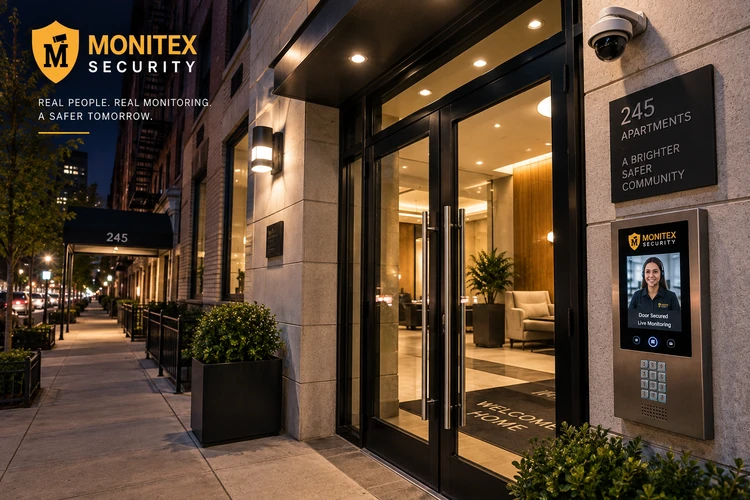
Monitex Security was founded in March 2019 and has grown to a team of 200 professionals serving properties in New York and across the country. Their approach to remote doorman services for apartment buildings centers on combining trained human agents with well-integrated technology, rather than relying on fully automated systems that lack judgment in ambiguous situations.
Every building engagement begins with a site assessment to identify camera placement, intercom compatibility, and access control integration points. From there, a monitoring schedule is established based on the building’s actual traffic patterns, whether that means full 24/7 coverage or peak-hour oversight with automated alerts overnight.
Their team also provides ongoing reporting so building management stays informed about access patterns, any unusual events, and system performance. This level of accountability is something fully automated solutions rarely offer.
You can reach Monitex Security directly at 929-279-4999 or by email at [email protected] to discuss your building’s specific needs.
For additional context on what a professionally managed remote monitoring operation looks like, the company’s comprehensive solutions overview gives a clear picture of how the different solution components work together to provide seamless access management and security oversight.
According to the National Apartment Association, technology adoption in residential property management has accelerated significantly, with access control and remote monitoring among the top areas where owners are making investments. Remote doorman solutions fit squarely within that trend.
Speak With a Remote Security Specialist Today
If you manage a residential building and you are weighing whether a remote doorman setup makes sense for your property, the clearest next step is a direct conversation with a specialist who understands both the technology and the building management realities that shape these decisions.
Contact Monitex Security and get a no-obligation assessment of your building’s current access setup, coverage gaps, and the options that fit your budget. Their team works with properties of all sizes across New York and nationwide, so whether you manage a 12-unit walk-up or a 200-unit mid-rise, the conversation will be tailored to your actual situation.
Call 929-279-4999, email [email protected], or submit an inquiry online to set up your consultation.
The Bottom Line on Remote Doorman Services for Apartment Buildings
Remote doorman services for apartment buildings represent one of the most cost-effective ways to maintain professional entry management without the overhead of full-time on-site staff. The technology is mature, the integration options are broad, and the quality of live monitoring has improved significantly as providers have invested in trained personnel and better camera infrastructure.
For building owners and property managers who are serious about tenant security and operational efficiency, evaluating this approach in 2026 is a practical and overdue step. Start with a site assessment, ask detailed questions about monitoring protocols, and compare at least two or three providers before committing to a contract.
Take Control of Your Building’s Security With a Free Consultation
Your building’s entrance is the first and most critical line of defense for your tenants, and leaving it understaffed or poorly managed creates real risk. Monitex Security’s team of 200 trained professionals is ready to assess your property and design a remote doorman setup that fits your building’s layout, traffic patterns, and budget. Whether you manage a small walk-up in Brooklyn or a large mid-rise across the country, the right solution exists and it starts with one conversation. Contact Monitex Security today and get a no-obligation site assessment from specialists who understand both the technology and the operational demands of residential property management.
Frequently Asked Questions
Q: How quickly does a remote agent respond when a visitor presses the intercom?
Response times for well-staffed remote doorman services typically range from a few seconds to under a minute, depending on the provider’s agent-to-building ratio.
Professional providers like Monitex Security assign dedicated monitoring personnel to a defined number of properties, which keeps response times fast and consistent. If a provider cannot give you clear information about their staffing ratios during a sales conversation, treat that as a red flag. Slow response times frustrate tenants and defeat the purpose of having live oversight at the entrance.
Q: Can a remote doorman system handle package deliveries for tenants?
Yes, most professional remote doorman services include a package coordination protocol that allows agents to verify delivery personnel and grant access to a designated package area.
The remote agent can communicate directly with the delivery driver, confirm the package recipient, and release the door to a secure drop-off zone. The interaction is logged with a timestamp and video record, so tenants and building managers can reference it if a package goes missing. This is one of the features tenants most frequently cite as a practical benefit of the system.
Q: Is a remote doorman system legal in New York City apartment buildings?
Yes, remote doorman systems are legal in New York City, provided the installation and operation comply with applicable building codes, tenant privacy regulations, and licensing requirements for security service providers.
Cameras in common areas such as lobbies and entrances are generally permissible under New York State law, though recording inside individual units is prohibited. Working with a licensed provider ensures your system is deployed correctly from the start. Monitex Security is fully licensed and familiar with New York City’s specific regulatory environment, so building owners do not have to navigate compliance questions on their own.
Q: What happens if the internet or power goes out in my building?
Reputable remote doorman providers include contingency protocols for connectivity and power outages, which typically involve backup cellular communication, local access override options, and immediate notification to building management.
The exact backup setup varies by provider and the hardware installed at your property. During your site assessment, you should ask specifically how the system behaves during an outage and whether fail-safe door positions are configurable, meaning whether doors default to locked or unlocked when the system loses power. This is a detail that matters significantly from both a security and a life-safety standpoint.
Q: How does a remote doorman service differ from a standard video intercom system?
A standard video intercom connects a visitor directly to the tenant’s phone or unit, while a remote doorman service connects the visitor to a trained live agent who manages access on behalf of the building.
With a basic video intercom, the tenant decides whether to buzz someone in, which means they are also responsible for screening strangers, managing deliveries, and handling unfamiliar situations at the door. A remote doorman service removes that burden from individual tenants and places it with a professional agent who follows documented protocols. The result is more consistent screening, better recordkeeping, and a higher standard of entry management across the board.
Where to Go From Here With Remote Doorman Services for Apartment Buildings
If your building is still relying on inconsistent staffing or a basic intercom system to manage front-door security, 2026 is a practical time to reassess that approach. Remote doorman services for apartment buildings have matured into a reliable, cost-effective alternative to traditional doorman models, and the technology available today supports a quality of interaction that tenants genuinely appreciate.
The next step is straightforward: schedule a site assessment with a qualified provider, review the monitoring protocols in detail, and ask for a clear breakdown of what is included at each service tier. Monitex Security serves properties across New York and nationwide, and their team is reachable at 929-279-4999 or [email protected]. Contact the team today and get a clear picture of what a professionally managed remote entry solution would look like for your specific property.