
24/7 SECURITY
Office Building Live Monitoring
Office building live monitoring is a security service in which trained operators watch an office building’s cameras in real time and act the moment something is wrong. They issue live audio warnings through on-site speakers and call police with verified details while the incident is still happening. Monitex Security provides it for building owners, property managers and facility teams who need entrances, lobbies, garages and perimeters covered after hours or around the clock, without paying for a guard at every door.
Key Takeaways
- Recorded cameras only show you what happened. With Monitex, trained operators watch your office building live and step in while a break-in, trespass or act of vandalism is still happening.
Operators warn intruders through on-site speakers, call police with verified details, and alert your building contacts, all in the same response.
It’s built for owners, property managers and facility teams running single-tenant offices, multi-tenant buildings, business parks and office campuses.
Monitex connects your existing cameras wherever possible, adds speakers, and can get a building live in a few hours to a few days.
Every event ends with a written incident report and timestamped footage for police, insurers and liability claims.
The outcome: every entrance, lobby, garage and perimeter watched by a live operator, at a fraction of the cost of staffing guards around the clock.
Office Building Live Monitoring That Stops Incidents While They're Happening
Most office buildings already have cameras. The assumption is that cameras equal security. They don’t.
A recording system does one thing: it stores footage. If someone forces a side door at 2 a.m. on a Tuesday, that footage gets reviewed on Wednesday morning, after the equipment is gone, the glass is broken and the tenants are asking questions. The camera saw everything and stopped nothing. Office building live monitoring closes that gap. Trained Monitex operators watch your cameras as events happen, warn intruders over on-site speakers, and bring in police while the person is still on the property. If you own, manage or secure an office building, this page covers what’s included, how it works, and how it compares with guards and alarm monitoring.
Contact For Inquiry to get a free security assessment and monitoring plan for your building.
Why Office Buildings Are Hard to Secure
Every office building has the same problem: it has to be easy to get into during the day and hard to get into at night.
Employees, visitors, couriers, cleaners and contractors come and go all day. Larger complexes add multiple entrances, loading docks and parking garages, and with them the risk of car break-ins and damage. Covering every one of those points with guards is expensive. Leaving them to recorded cameras means finding out too late.
The riskiest hours are the ones when nobody is around, typically between closing time and the next morning. That’s when forced entry, equipment theft, vandalism and people sheltering in stairwells or vestibules tend to happen. It isn’t enough to have cameras running overnight if nobody is watching them.
Office buildings are part of what the U.S. Cybersecurity and Infrastructure Security Agency calls the Commercial Facilities Sector: places open to the public where many people gather. That openness is what makes them useful, and it’s what makes them hard to protect with cameras alone.
Common Mistakes That Leave Office Buildings Exposed
Even buildings with cameras get caught out by the same few mistakes:
- Cameras with no overlap. Visible cameras with gaps between them give intruders a map of the blind spots. Our guide to camera coverage and placement shows how to avoid this.
- Low-resolution cameras. Footage too grainy to identify anyone. A few well-placed, well-lit cameras beat many poorly placed ones.
- Interior-only coverage. Ignoring parking and the perimeter, where most incidents start.
- Untested audio. Speakers that nobody checks until a real incident needs them.
- “Set it and forget it.” Never reviewing footage quality or alert rules after the system goes in.
If your system has several of these, it may be time to look at the signs your security system is outdated.
The solution: 24/7 Remote Monitoring
With every angle covered by our cameras, we prevent break-ins and theft. We also install loudspeakers around your property, using them to deter prospective criminals when suspicious activity is noticed.
At a fraction of the price of employing security guards, remote video surveillance is budget-friendly, no matter the size of your enterprise.
By using our virtual doorman and concierge services, you can monitor and control access to your building, keeping out unwanted visitors and demonstrating that safety is your top priority.
With shifts of highly trained virtual guards observing the screens every minute of the day, your property is never exposed. Day or night, any time of year, every area is under our watchful eyes.
Where Live Monitoring Protects Your Office Building
During the assessment, we map your cameras against the places where incidents actually start, so your office building video surveillance covers the right ground.
- Entrances, lobbies and ground-floor glass. Forced entry, propped doors and tailgating after hours. For lobbies that need visitors and deliveries screened, our remote doorman service adds virtual doorman and concierge access control without a staffed front desk.
- Parking garages and lots. Vehicle break-ins, loitering and people sheltering in stairwells. Buildings with large lots can also see our parking lot monitoring.
- Loading docks and service entrances. Out of sight most of the day, and where equipment and deliveries go missing.
- Stairwells, rooftops and HVAC access. Common after-hours entry points that interior-only systems miss.
- Server rooms and executive areas. Restricted zones that shouldn’t see anyone after hours.
- Vacant suites and floors under renovation. Empty space attracts trespassers, especially in buildings with tenant turnover.
Operators can also flag problems cameras can see that aren’t crimes, such as smoke or water where it shouldn’t be, so they’re caught at night rather than the next morning.
Staff and tenant safety matters too. People work late, cleaning crews come in, and tenants use the building on weekends. OSHA treats workplace violence as a recognized workplace hazard that employers should plan for. Live operators give the building a second set of eyes when it’s quiet, and can bring in help quickly if something goes wrong.
Live Monitoring vs. On-Site Security Guards
Guards still have a place. Some buildings want a person at the front desk. But for watching an entire office property, especially overnight, the cost of guards goes well beyond the hourly wage.
According to the U.S. Bureau of Labor Statistics, the median security guard earned $38,020 a year in May 2025. On top of wages come recruitment, background checks, training, uniforms, benefits, overtime, holiday pay and supervision. And covering a single post around the clock takes 168 hours a week, which is more than four full-time guards for one spot.
On-site guards | Monitex live monitoring | |
Coverage | One area per guard at a time | Every camera at once |
Overnight and weekends | Extra shifts required | Covered by shift-based operators |
Sick days and no-shows | Coverage gaps | No gaps |
Consistency | Varies with fatigue and distraction | Protocol-driven and logged |
Response | Physical presence only | Audio warning, police, your contacts |
Evidence | Verbal or written report | Written report plus timestamped video |
Adding buildings | Hire for each site | Add the site to your plan |
Many buildings use live monitoring to cut guard hours rather than replace guards completely. They keep a daytime concierge and hand nights and weekends to Monitex. See virtual security guard services for that model, and why security guards fail for the common gaps in guard-only coverage.
Pricing for office building video monitoring depends on how many cameras we watch and for how many hours, so every quote is built for the building. For what drives the cost, see our live video monitoring cost guide.
Simple Set-up
Getting started with Monitex security can be a matter of a few hours, and never more than a few days.
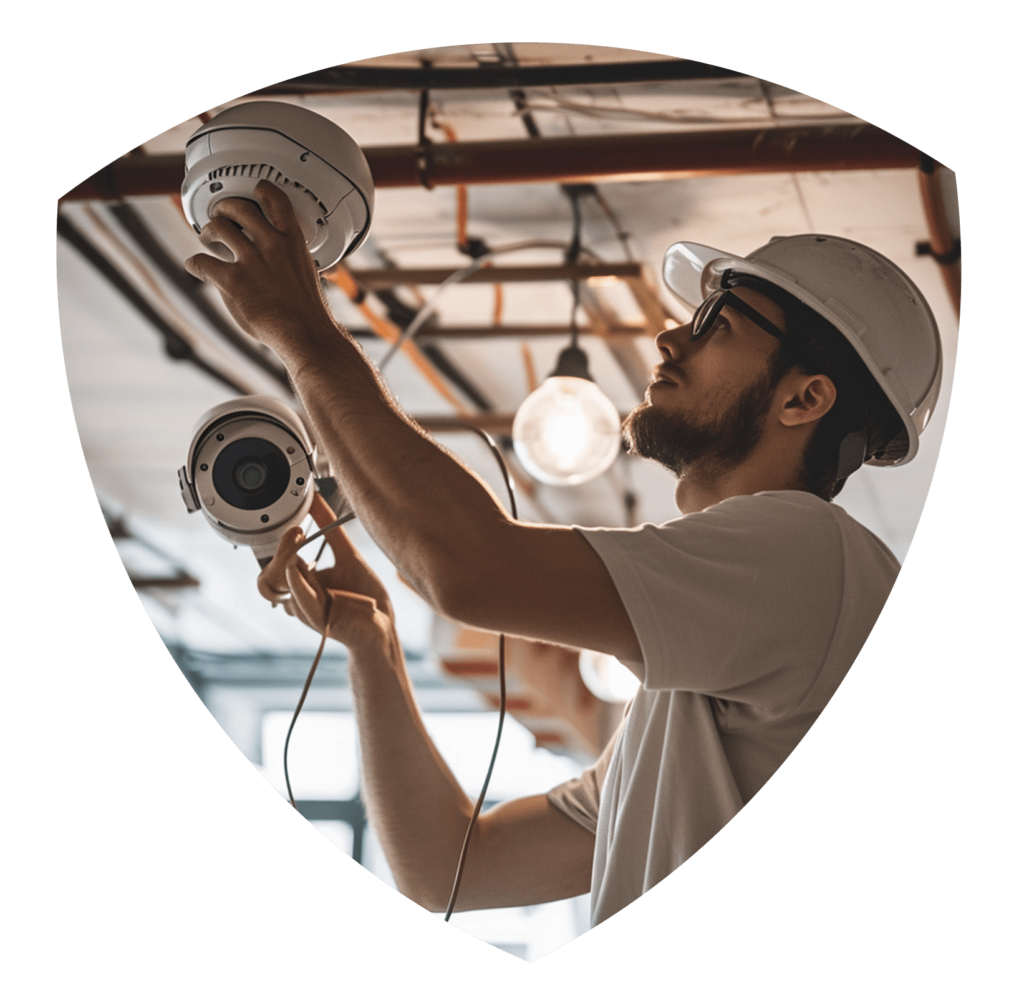
Our team analyzes your property and its existing security measures, designing a surveillance plan that will cover every angle.
*or install new ones where necessary
Streaming continuous live footage from your property, our remote guards watch out for threats and suspicious activity, reacting swiftly if anything is noticed.
They’ll issue warnings via loudspeaker, dispatch law enforcement where necessary and communicate closely with the police department to apprehend the criminals efficiently.
You’re free to focus on other aspects of your business, knowing that under the watchful eyes of our skilled team, your property is safe from damage or theft.
Who We Work With
Office building live video monitoring from Monitex is built for businesses. We work with:
- Property managers running multi-tenant office buildings who need fewer incidents and fewer tenant complaints.
- Owners and asset managers protecting one building or a portfolio.
- Corporate facility and security managers covering a headquarters, branch office or campus.
- Business parks and office campuses with large perimeters, garages and many entrances.
- Small office buildings with just as many entry points as larger ones but far less security in place.
Why Office Teams Choose Monitex
- Trained people make the calls. Intelligent video analytics help filter out false alarms, but a trained operator verifies every alert before anyone acts.
- No downtime. Shifts of trained operators watch your screens every minute of the day, any time of year.
- Experience at scale. Monitex has monitored more than 1.3 million hours of live video.
- 24/7 U.S. monitoring.
- More than monitoring. Virtual doorman and concierge services let you control who enters your lobby, not just watch it.
- Evidence you can use. Timestamped footage and incident reports support police reports, insurance claims and defense against fraudulent liability claims. See how monitoring can help reduce insurance claims.
- Member of The Monitoring Association (TMA).
Get reliable, affordable security for your office building.

Office Building Live Monitoring FAQs
How does office building live monitoring work?
Your cameras stream to the Monitex monitoring center, where trained operators watch them during your coverage hours. When something looks wrong, the operator checks it against your monitoring plan, so cleaners, late staff and tenants aren’t treated as intruders. If it’s a threat, they issue a live warning through on-site speakers and call police and your contacts if needed. Every event ends with an incident report and footage.
Can you use our existing cameras and access control?
In most cases, yes. We connect existing cameras wherever possible and check that the image quality holds up at night. Where a camera is missing or unusable, we recommend what’s needed. If you want to connect access control or intercom systems, we’ll map what’s possible during the site assessment.
Is live monitoring worth it for a smaller office building?
Often, yes. A small building with a few tenants has just as many doors and after-hours weak points as a large complex, but usually much less security in place. Because coverage is priced by cameras and hours, live monitoring scales down to smaller properties.
How long does it take to get started?
Getting started with Monitex can be a matter of a few hours and is never more than a few days. The assessment and camera connection take most of the time. Buildings that need extra cameras or speakers are at the longer end.
How is this different from alarm monitoring or a guard company?
Alarm monitoring reacts to sensors, usually without video, so operators can’t see what triggered the alarm. A guard company puts people on site, which is costly to run around the clock. Office building live monitoring puts trained operators on your cameras in real time, across the whole property at once, and documents everything they do.